
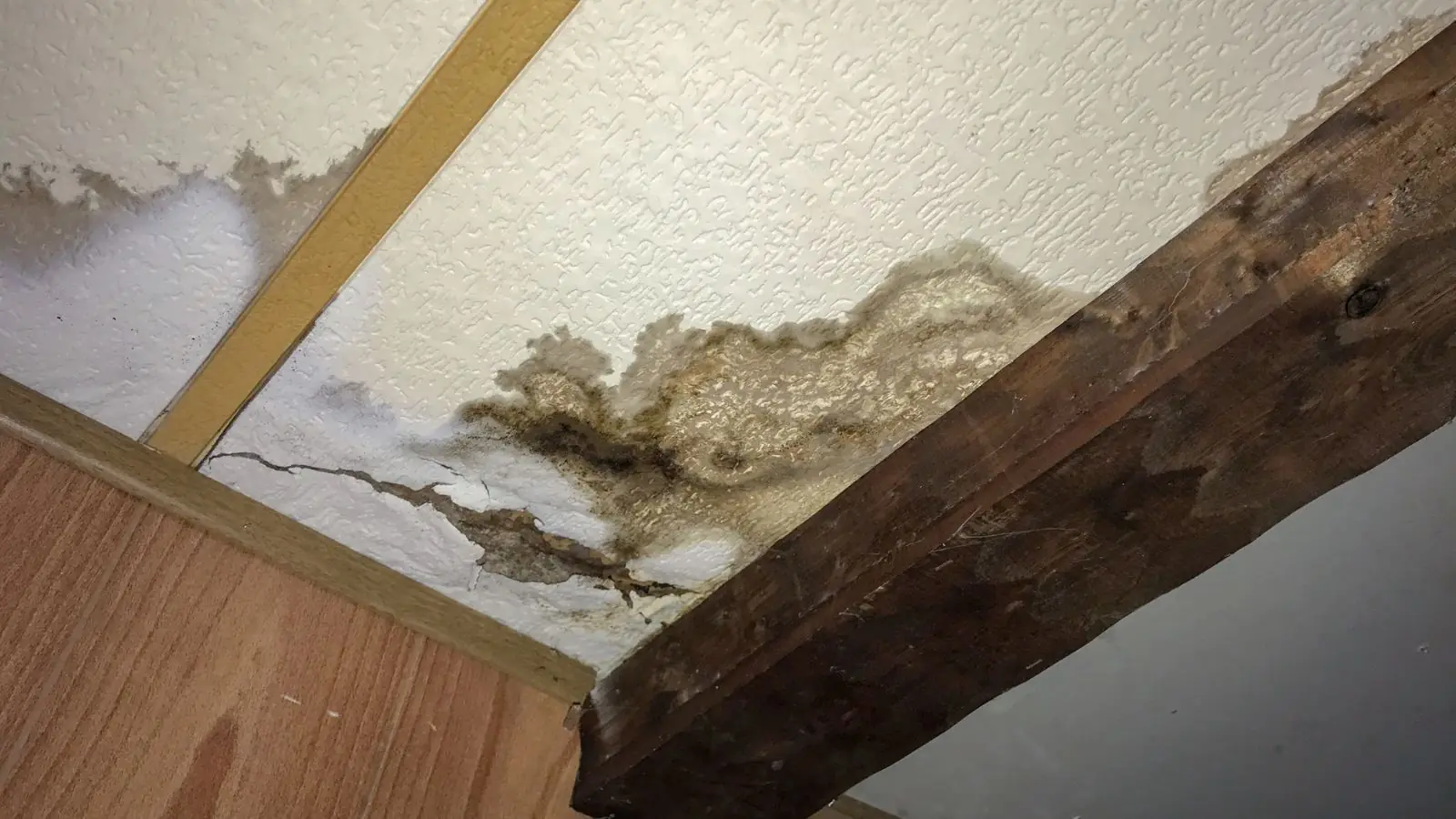
Two causes, two patterns
Most bathroom ceiling spots come from steam. Warm, wet air rises, meets a cooler ceiling surface, and condenses into a film that dark growth loves. The marks usually collect near the shower, in corners, and around the fan grille, in speckled or fuzzy patches on a painted surface.
A leak from above looks different. It leaves a tan or brown ring with a defined edge, often with bubbling paint, a soft spot, or a stain that grows after someone upstairs showers or after rain. Dark growth inside a ring is a sign that the drywall has been wet from inside, and that wipes and fans will not solve it.
Reading the stain
| What you see | Likely cause | First move |
|---|---|---|
| Speckled dark dots near the shower, no ring | Steam condensing on the ceiling | Run the fan longer, clean the surface, check venting |
| Dark patches around the fan grille | Weak fan or duct that is not moving air out | Test the fan and look at where the duct ends |
| Tan or brown ring with a hard edge | Water from above: roof, supply line, or drain | Find and fix the source before cleaning |
| Soft, sagging, or bubbling paint | Drywall that has been wet for some time | Keep people out and call a professional |
| Stain that darkens after rain | Roof or vent flashing leak | Call a roofer, photograph, then dry the ceiling |
| Stain that returns after a second-floor shower | Tub, shower pan, or drain leak | Call a plumber and have the ceiling dried |
Call the 24/7 line and describe what you see.
Where the exhaust fan actually vents
A fan that pushes air into the attic is quietly moving the problem upstairs. The moisture collects on the roof sheathing and the insulation, and it can soak the ceiling from the back. Bathroom exhaust is meant to run through a duct to the outdoors, through a roof jack or a wall cap.
Climb into the attic with a flashlight if you can do so safely. Look for a duct that is crushed, disconnected, or loose, and check whether the end is outside or just sitting in the insulation. If the fan is loud but a tissue does not stick to the grille, it is not pulling much air.
Fan size matters too. A small, old fan in a bathroom with a long duct run may move too little air to clear a hot shower, even though it spins. If the grille is yellowed and the motor rattles, replacing the unit and the duct is often the better fix than repainting the ceiling every year.

What to do about moisture: habits and fixes
These changes handle most steam-driven spotting.
- Run the fan during the shower and for a good while afterward until the mirror clears.
- Wipe the shower walls and the ceiling above the shower with a squeegee or towel.
- Crack the door only after the steam has been vented, not during the shower.
- Recaulk gaps around the tub and fixtures, and replace cracked grout so water stays in the shower.
- Clean the fan grille so dust does not choke the airflow.
- Do not paint over dark spots. Clean first, find the cause, then prime.
When a spot means a leak
If the spot returns within weeks of cleaning, has a ring, or sits under another bathroom, a roof penetration, or an attic duct, stop treating it as a housekeeping issue. A plumber or roofer finds the water, and then the damp drywall is dried and, if needed, replaced.
That second part is water damage repair, the rebuild after the readings are normal. If growth has spread past the ceiling surface or into insulation, the scope becomes mold remediation, with containment and HEPA vacuuming under ANSI/IICRC S520. Ask any company whether its crews work to that standard.
A note on what this page does not say
Take photos of the spot today, with a coin or ruler for scale, and again in two weeks. A spot that has not changed after a cleaned surface and a month of better fan habits was probably condensation. A spot that grew, or reappeared inside a ring, points to water you have not found yet, and the photos give a plumber, roofer, or your insurer a clear timeline.
Mold needs moisture, and that is the only reliable rule. This page does not diagnose anything or tell you what a spot means for anyone's health, and questions of that kind belong to a physician.
For homes in Nipomo and Pismo Beach, the same logic applies: find the water, fix the airflow, then clean or remove.
Arroyo Grande note: about 2 miles from the ocean
Arroyo Grande sits about 2 miles inland from the Pacific, at an elevation of about 118 feet. Homes here do not get a pass on ventilation, so treat every bathroom as one that needs its own working exhaust path.
Test each fan once a season: hold a tissue to the grille, confirm it holds, and check the duct end outdoors. Any bathroom with no fan, or with a window as the only vent, is a candidate for a new fan installed by a licensed electrician or contractor.
Source type: Wikipedia and 2020 Census figures
Need it checked?
Scope and price are explained before work starts, and the line is answered 24/7. Want your real number? Call (805) 291-8940.
Questions Homeowners Ask
Is black spotting on a bathroom ceiling always mold?
Not always. Dirt, soot, and old stains can look similar, and color alone does not tell you what it is. If the spot is damp, returns, or sits near a stain ring, treat it as a moisture problem and have it looked at.
Can I clean bathroom ceiling mold myself?
A small, surface-only patch on firm, dry paint can be cleaned by a homeowner wearing a respirator and gloves. Anything larger, soft, or recurring should be seen by a professional.
Should a bathroom fan vent into the attic?
No. Exhaust should travel through a duct to the outdoors, so the moisture does not collect on the insulation and roof sheathing.
How long should I run the fan after a shower?
Until the mirror is clear and the air feels dry, which is often longer than people expect. A timer switch makes that easy.
Does insurance cover a bathroom ceiling stain?
A sudden and accidental leak is often covered, while a slow leak or neglected ventilation often is not. Check your policy and ask your insurer.
How often should I check my bathroom fan in Arroyo Grande?
Once a season is a reasonable rhythm. Check the airflow with a tissue, clean the grille, and look at the duct end outside.