
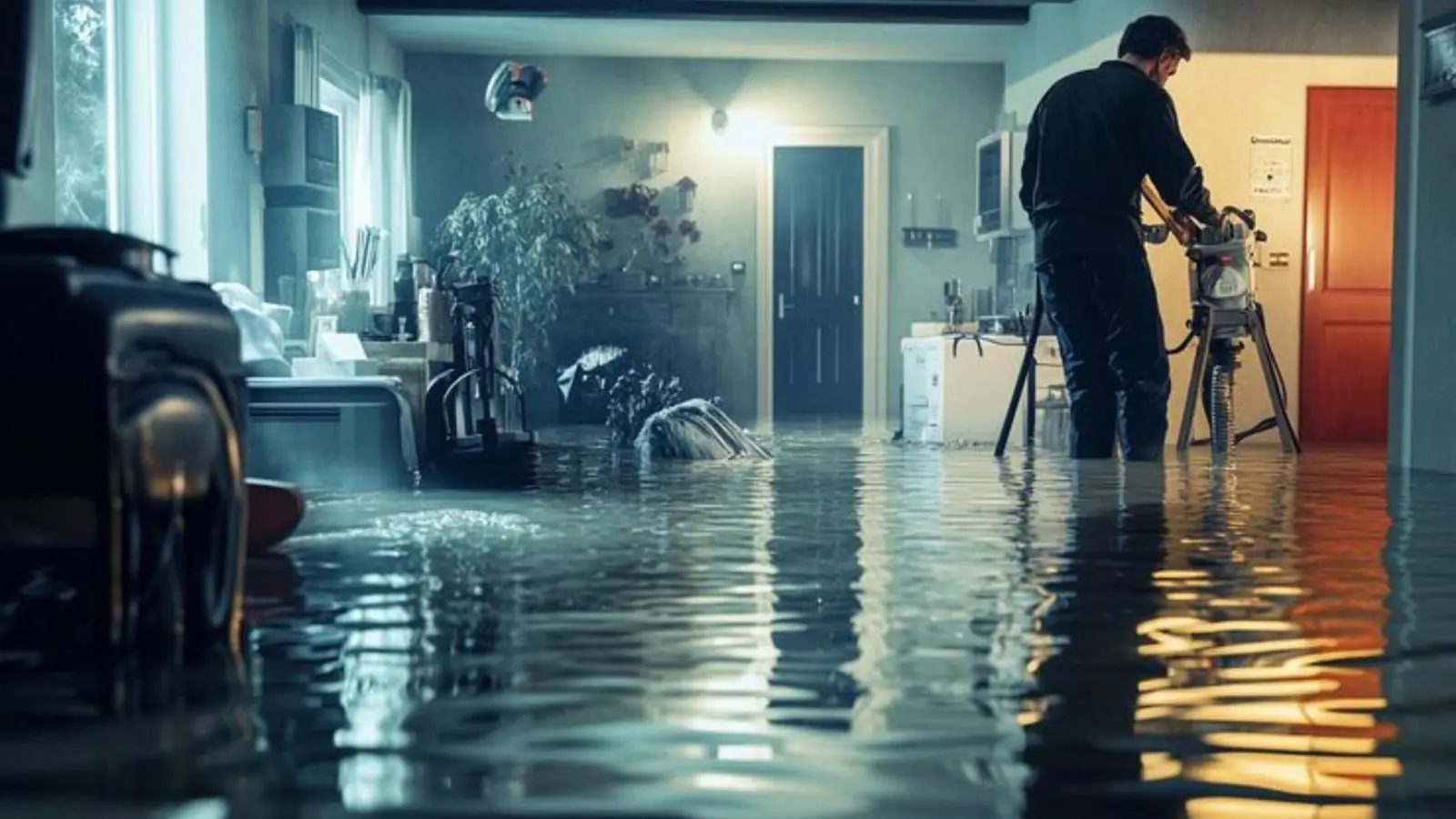
Water mitigation in Arroyo Grande, CA starts with the clock
If water is moving through your home right now, speed matters more than anything else on this page. Water mitigation is the work of limiting damage in the first 24 to 72 hours: stopping the source, starting extraction and setting up drying equipment before wet materials fail. Our dispatch line is answered 24/7 for Arroyo Grande, CA.
While you wait, shut off the main water valve and stop the source if you can. Turn off power to wet areas only if you can reach the panel without standing in water. Lift valuables onto counters and keep people and pets out of any water that may be contaminated.
My ceiling is stained and the carpet is wet. What now?
A brown ring overhead and soggy carpet below usually mean water has already travelled through a wall or ceiling cavity. The trade name for what you need is water mitigation. It means finding every wet surface, including the ones you cannot see, and drying them before they swell, stain or grow mold.
The emergency line is answered 24/7, every day.
When a leak is an emergency, not a to-do
Call right away when water is still running, when it has reached more than one room, when ceiling drywall bulges or sags, or when the water came from a toilet, drain or sewer line. A slow drip under a sink can wait until morning only if the valve is closed and the cabinet is empty.
After hours is when most of these calls start. A washer hose lets go at night or a water heater tank fails on a weekend, and the carpet pad soaks it up before anyone is awake. Same-day response is offered when available, and the line stays open at night.
Safety first: electricity, gas and sewage
Some situations are not for homeowners to handle. Make these calls before the restoration line.
- If water touches an electrical panel, outlets or a ceiling light fixture, stay out of the room. Cut power only if you can reach the panel while standing on dry ground.
- If you smell gas or see sparks, leave and call 911 or the utility, then call us.
- If sewage or toilet overflow is involved, keep everyone out and avoid touching the water or soaked materials.
- Never use a household vacuum on standing water.
Structural drying: what actually happens inside your walls
Structural drying is the longest part of mitigation, and the part most people underestimate. Surface water comes up fast. The moisture that soaked into drywall, baseboards, subfloor and insulation takes days to leave, and it only leaves if the air around it is kept dry and moving.
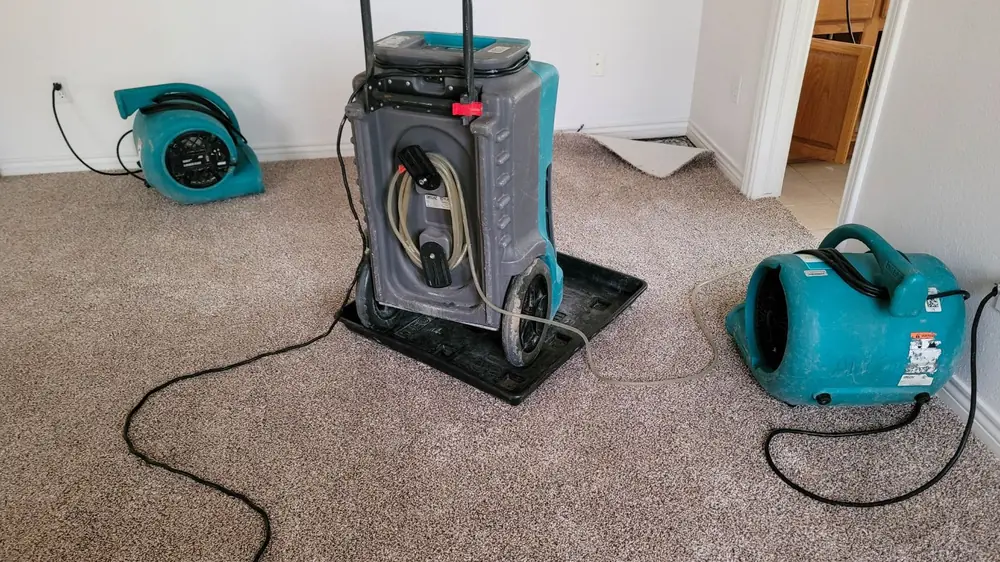
A crew sets air movers to push dry air across surfaces and LGR dehumidifiers to pull moisture out of the air. Moisture meters read each material, and a thermal imaging camera shows cold, wet patches inside walls. Small holes may be cut at the base of a wall so dry air can reach the cavity.
Each visit, readings are recorded and equipment is moved or removed. Drying is done when materials reach dry standards, not when the room feels dry. Ask any company whether its crews work to ANSI/IICRC S500, the published standard for water damage restoration.
The mitigation sequence
- 1
Stop the source
Close the fixture valve or the main, or tarp a roof opening so more water stops arriving.
- 2
Extract standing water
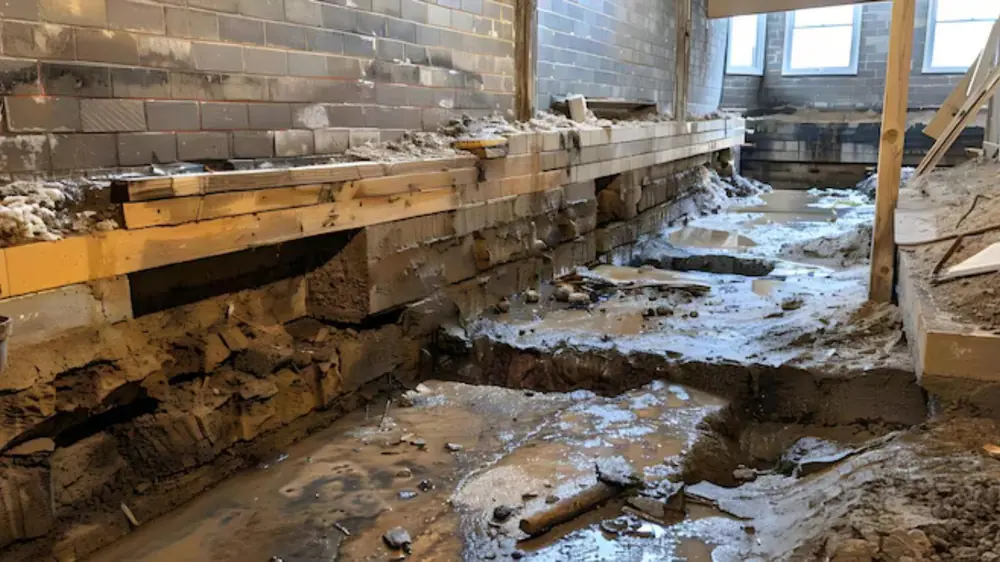
Extraction units pull water from floors, and heavier tools lift it from carpet and pad.
- 3
Map the moisture
Meters and a thermal camera record what is wet, how far it reached and where drying must focus.
- 4
Set the equipment
Air movers and dehumidifiers go in room by room, sized to the volume of air and the number of wet surfaces.
- 5
Monitor and adjust
Daily readings decide whether to move equipment, open another wall or finish.
Dry in place or tear out? A quick guide
Mitigation tries to save what can be saved. The material and the type of water decide which way it goes.
| Material | Often dried in place | Often removed |
|---|---|---|
| Drywall | Clean water caught early, walls that are not swollen | Sagging, crumbling or contaminated sections |
| Carpet and pad | Carpet after clean water, with pad usually replaced | Carpet after sewage or long soaking |
| Hardwood and subfloor | Boards with surface moisture, dried slowly | Boards that cup or buckle badly |
| Insulation | Rarely worth drying once soaked | Usually pulled and replaced |
| Baseboards and trim | Painted solid wood that dries clean | Swollen or finish-failed pieces |
What drives the cost of mitigation
| Factor | What it means for your job |
|---|---|
| Water category | Clean, gray or black water changes how much must be removed and treated |
| Affected area | Square footage and number of rooms set how many air movers and dehumidifiers are needed |
| Materials | Hardwood, tile, carpet and drywall each dry at different speeds |
| Drying days and equipment | More days and more units mean a larger equipment charge |
| Rebuild scope | Repairs after drying are quoted separately from mitigation |
Scope and price explained before work starts. Want your real number? Call (805) 291-8940.
What mitigation does and does not cover
Mitigation stops damage from growing. It does not repair the pipe, rebuild the ceiling or fix a roof. Once readings are dry, the next stage is water damage repair, and removal of debris or contaminated materials falls under water damage cleanup. We do not handle fire damage.
If moisture stayed in a wall too long, mold may be present. That calls for testing and remediation under ANSI/IICRC S520, covered on our mold remediation page. For standing water that needs pumping now, see emergency water removal.
Near the Five Cities
The county reports that Arroyo Grande, Grover Beach, Pismo Beach and Oceano all receive water from the Lopez Water Project. That tells you nothing about your own shutoff, so ask your water utility where the meter valve is and mark it. Crews dispatched from Arroyo Grande reach Grover Beach, about 3 miles northwest, as well.
Source type: San Luis Obispo County Public Works page
Common Questions
Do you handle water mitigation emergencies at night or on weekends in Arroyo Grande?
Yes. The line is answered 24/7, including nights, weekends and holidays. Same-day response is offered when available, and no arrival time is promised before the crew has your address and situation.
My ceiling is stained and the carpet is wet. Is that water mitigation?
Yes. Stained ceilings and wet carpet point to moisture inside the structure. Mitigation finds it with meters and a thermal camera and dries it before the drywall fails.
How long does structural drying take and what equipment is used?
Many jobs run for several days, depending on materials and how much water got in. Equipment typically includes air movers, LGR dehumidifiers, moisture meters and a thermal imaging camera. The crew records readings at each visit and stops when materials are dry.
Is water mitigation covered by insurance?
Sudden and accidental water damage is often covered, while gradual leaks and neglect often are not. Flood is usually excluded and needs separate flood coverage. Check your policy or ask your insurer, and take photos before anything moves.
What is the difference between mitigation and repair?
Mitigation dries and protects. Repair rebuilds drywall, insulation, flooring and paint after the structure is dry. They are separate stages and are scoped separately.
Can I start drying with fans from the hardware store?
Fans move air but do not remove moisture from it, and they cannot tell you what is wet inside a wall. They are fine as a bridge while waiting, but a moisture meter and a dehumidifier do the real work.