
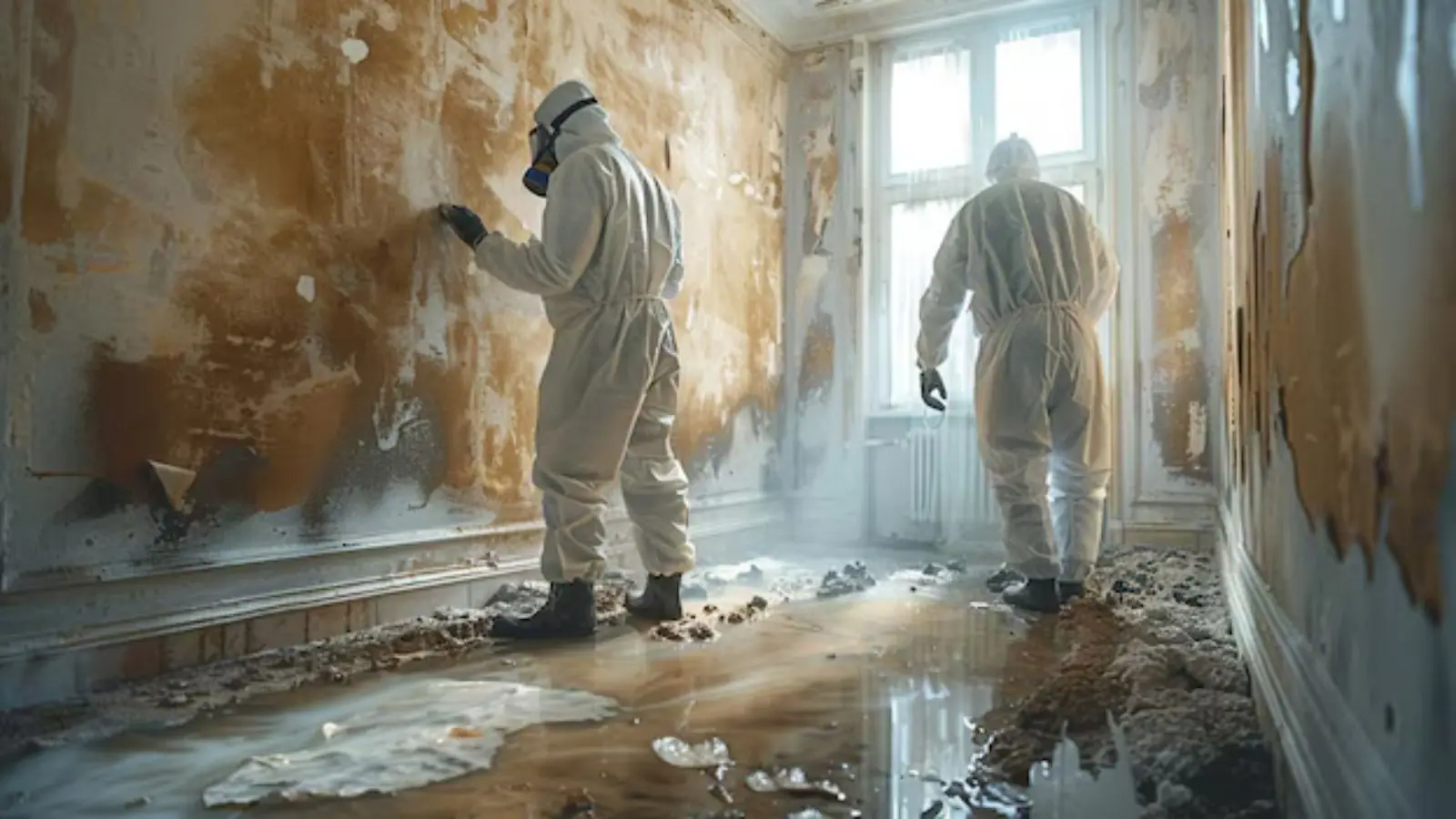
What mold remediation actually is
Mold remediation in Arroyo Grande, CA is the process of finding the moisture feeding a mold problem, sealing off the affected area, removing or cleaning contaminated materials and checking that the space is dry and clean afterward. It is a building-science job, not a spray-and-wipe job.
The published industry standard is ANSI/IICRC S520. You can ask any company whether its crews work to it, and what that means for containment, air filtration and how they confirm the work is finished.
Why moisture comes before mold
Mold needs moisture to grow, so cleaning growth without fixing the water source just sets up a repeat. A pinhole leak under a sink, a clogged condensate line, a roof leak or a damp crawl space can all feed it. A moisture meter and a thermal imaging camera help a technician see where the damp is hiding, even behind paint.
No honest company promises mold will never return. What a good job does is remove the growth, correct the moisture condition and leave the area dry, so the conditions that fed it are gone.
The emergency line is answered 24/7, every day.
Mold After Water Damage
Most household mold shows up after a leak or flood that was never fully dried. Wet drywall, carpet pad, insulation and baseboards that stay damp can start growing mold. That is why fast water mitigation with air movers and LGR dehumidifiers is the best way to avoid needing remediation at all.
If you had water in your home and the damage was never dried, a musty smell, bubbling paint or dark spots near the old wet area deserve attention. Call and describe what you see. A technician can tell you whether that sounds like surface growth or something inside the wall.
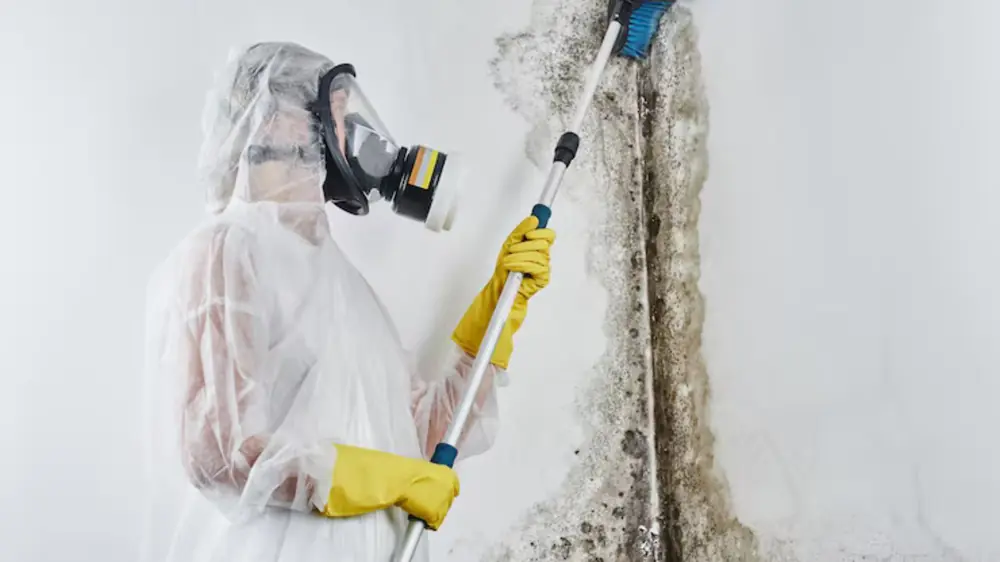
Mold Removal and Black Mold Cleanup
People search for black mold cleanup because the color is alarming. Color alone does not identify a mold species, and we make no health claims about any type. Questions about how mold affects a person belong to a physician. What matters for the building is the same for any growth: find the moisture, contain it and remove it.
Porous materials such as drywall, ceiling tile, carpet and insulation with active growth are usually bagged and removed. Framing and other solid surfaces are HEPA vacuumed, cleaned and treated, and then dried. Workers wear respirators, gloves and protective suits, and air scrubbers with HEPA filters run during the work.
Do not scrub a large patch with bleach or dry-sweep it. That stirs spores into the air and can spread them to rooms that were clean. If the area is bigger than a small spot or sits on a wall that was wet, stop and call.
Mold testing and inspection
A mold inspection begins with a visual check and moisture readings. Where it makes sense, air or surface samples go to a lab, and the results are compared with an outdoor sample taken the same day. Testing tells you what is present, but it does not replace finding the water source.
Ask who is doing the testing and who is doing the removal. Some homeowners prefer those to be separate companies so the person verifying the result has no stake in the work. Ask whether your state licenses mold work, and ask for any license number in writing.
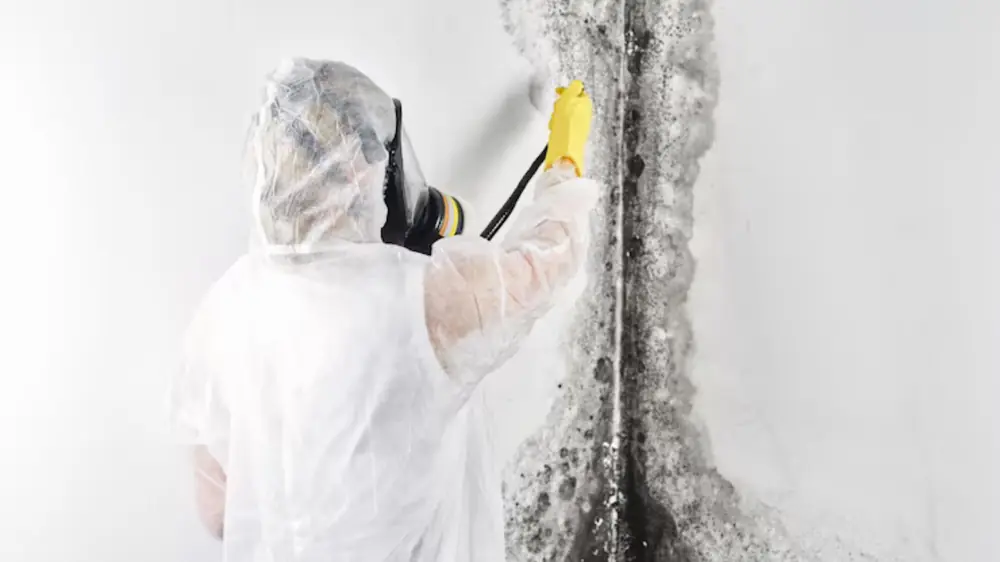
How S520 containment works
Containment is what keeps a small problem from becoming a whole-house problem.
- 1
Isolate the area
Plastic sheeting seals the work zone, and a negative air machine pulls air out through a HEPA filter so spores stay inside.
- 2
Protect the entry
A decontamination chamber at the door lets workers remove suits before leaving.
- 3
Remove and clean
Contaminated porous materials are bagged, and framing is HEPA vacuumed and cleaned.
- 4
Dry the structure
Air movers and dehumidifiers bring the cavity back to normal moisture readings.
- 5
Verify
A visual check and moisture readings confirm the area is ready, and a post-work test is an option.
DIY cleanup or a professional crew
| Situation | Reasonable approach | Call a professional when |
|---|---|---|
| A small spot on a hard surface, such as tile grout | Wipe with detergent and water, fix the moisture | It returns after a week or two |
| Growth on drywall or ceiling | Do not scrub, take photos | Any visible growth on porous material |
| Musty smell with no visible source | Look for leaks, check under sinks | The smell persists after the area dries |
| After a flood or sewage backup | Keep out and photograph | Always, because the materials are wet and contaminated |
What drives the cost of mold remediation
| Factor | Why it matters |
|---|---|
| Size of the affected area | More square footage means more containment and more removal |
| Materials involved | Drywall and carpet come out, solid framing can be cleaned |
| Hidden growth | Cavities behind walls require opening and inspecting |
| Moisture source | Water repairs by a plumber or roofer are separate |
| Testing and rebuild | Lab work and replacing walls or flooring are added steps |
Scope and price explained before work starts. Want your real number? Call (805) 291-8940.
What we do and what we do not do
We dispatch licensed and insured professionals for containment, removal and drying. We do not diagnose illness, we do not repair plumbing or roofs, and we do not do fire damage. Mold coverage varies widely by policy and cause, with sudden and accidental water damage more often covered than slow leaks, so check your policy and ask your insurer.
Mold work is dispatched for homes in ZIP 93420 in Arroyo Grande. If the real problem is fresh water in neighboring Grover Beach, call anyway and the dispatcher will point you to the right service. Work of $1,000 or more in combined labor and materials needs a California contractor license as of January 1, 2025, and you can check any license on the CSLB website. For rebuilding afterward, see water damage repair.
What to do before you call about mold
Disturbing mold spreads spores through the house, so a few small restraints help.
- Do not scrub, sand or scrape the area, and do not run a fan across it.
- Do not paint or caulk over it, because the moisture underneath keeps going.
- Find and stop the water if you can, such as a dripping line or a blocked bath fan.
- Photograph the area and note when you first saw it, which helps any later scope or insurance conversation.
- Leave health questions to your physician, then call (805) 291-8940 to talk through containment and testing.
Common Questions
How do I know if I have mold or just a stain?
You often cannot tell by sight. Moisture readings and sometimes a lab sample are what confirm it. If a stain sits where water once leaked, treat it as suspect and call.
Is mold testing necessary?
Not always. If growth is visible and the moisture source is known, many jobs proceed without it. Testing helps when the smell is strong but nothing is visible, or when you want a documented result.
Can you remove black mold?
Yes, the work follows the same steps for any growth: find the moisture, contain the area and remove contaminated materials. We make no health claims about any mold color. Health questions belong to a physician.
Will the mold come back after remediation?
No one can promise that. Mold needs moisture, so the result depends on whether the water source is fixed and the structure stays dry.
Does insurance cover mold remediation?
It depends on your policy and what caused the moisture. Sudden and accidental water damage is often covered and gradual leaks often are not. Check your policy or ask your insurer.
Do you take mold calls at night?
The line at (805) 291-8940 is answered 24/7. Most mold work is scheduled, but if active water is still flowing, say so and the dispatcher will treat it as an emergency.