
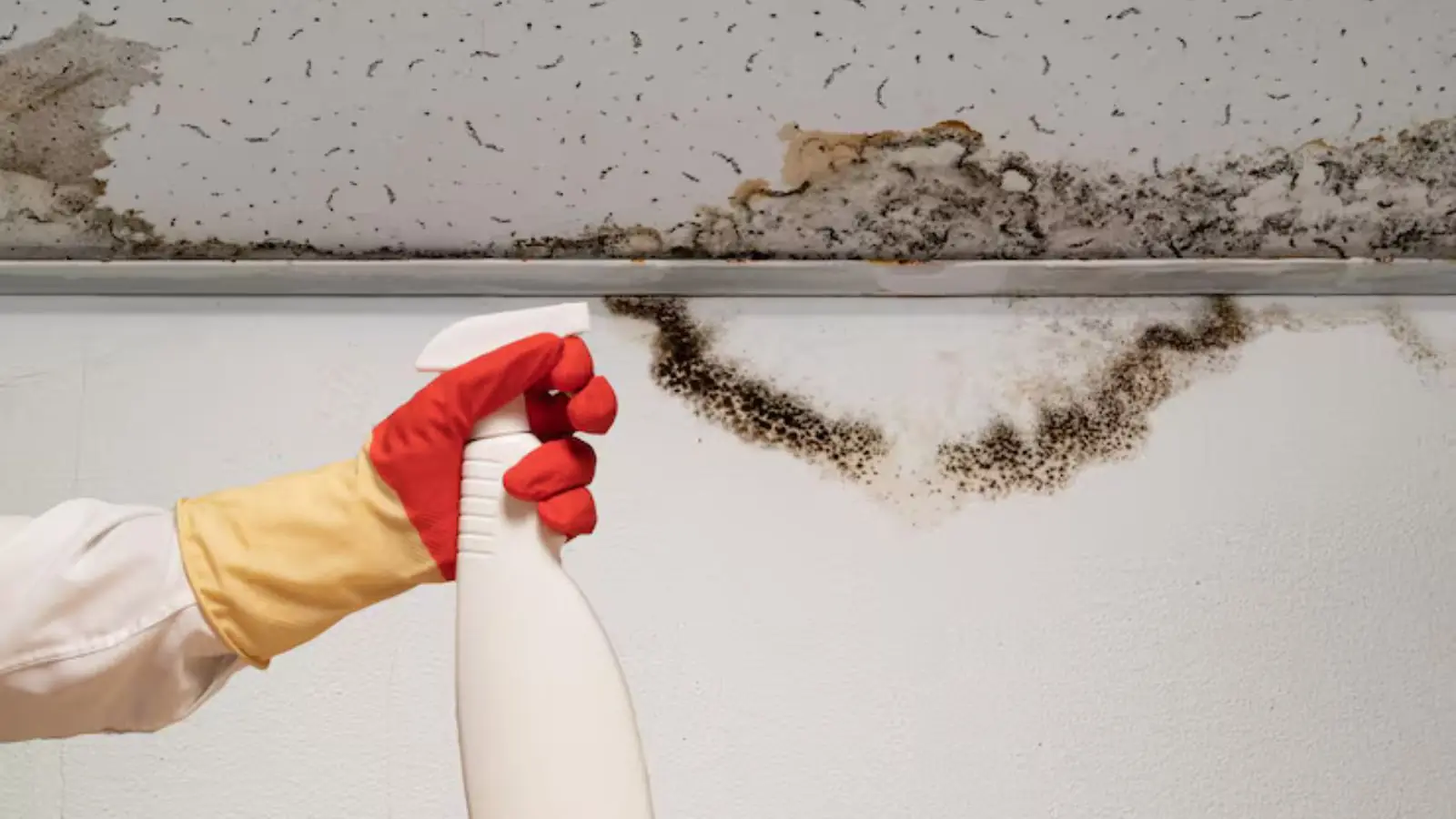
Start by asking where the moisture is coming from
A dark spot on a ceiling is a symptom. The cause is almost always moisture that is arriving from somewhere above or inside the ceiling. Mold needs a damp surface to grow, so if you see black growth in Arroyo Grande, CA, the real question is what is keeping that drywall wet.
Treat the patch as a clue and not as the whole problem. Scrubbing the surface without fixing the water leaves you with a clean ceiling for a few weeks and the same stain after that.
Three things that look alike from the floor
Standing under the ceiling, a flashlight and a step stool tell you more than a guess. Compare what you see with the table.
| What you see | Likely it is | How it behaves |
|---|---|---|
| Fuzzy or speckled black, green or gray patches, often in clusters | Possible mold growth | Spreads outward in spots and rings, usually on a damp or recently damp area |
| Tan or brown ring with a darker edge, flat and smooth | Water stain | Stays the same size once the leak stops, and may return a ring each time it gets wet again |
| Gray or black smudges in lines or along edges, wipes off dry | Soot-like dust | Collects near vents, light fixtures and the seam where a wall meets the ceiling |
This table helps you describe what you see. It is not a diagnosis. Testing, if needed, is done by a professional following ANSI/IICRC S520.
Call the 24/7 line and describe what you see.
Where the water usually comes from
Roof
A lifted shingle, bad flashing or a clogged valley sends water into the attic, then down into the ceiling below.
Attic
Vent ducts that dump warm air into a cold attic leave condensation on the roof deck and the insulation.
Bathroom above
A failing tub seal, a leaking supply line or a shower pan can soak the ceiling of the room underneath.
Bathroom fan
A fan that vents into the attic instead of outside fills that space with steam every morning.
Plumbing in the ceiling cavity
A pinhole in a pipe leaves a slow, steady stain that grows in a ring.
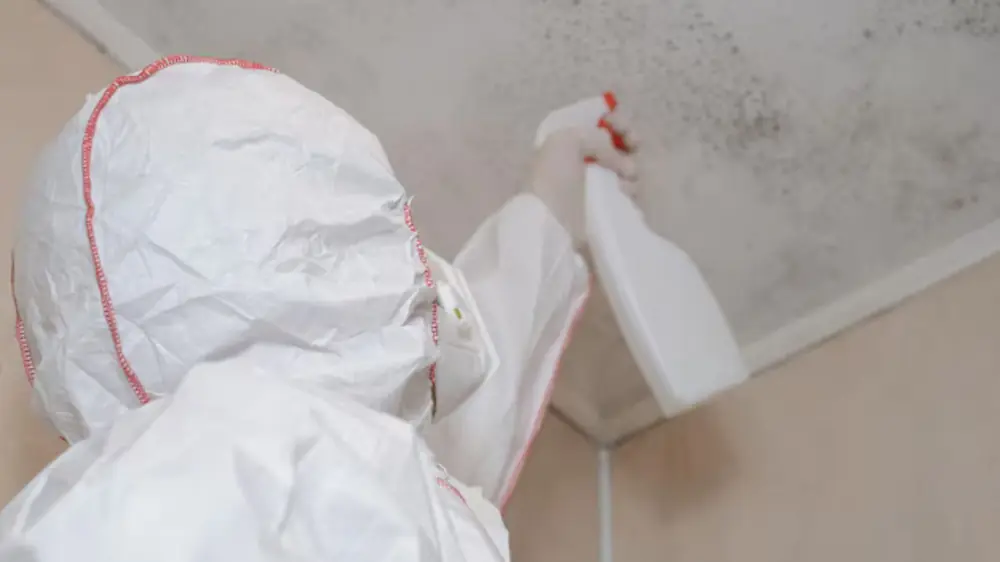
Arroyo Grande note: if you rent, put it in writing
The 2020 Census counts about 7,979 housing units in Arroyo Grande, with about 66 percent of occupied units owner-occupied. That leaves roughly one in three households renting. If you are one of them, the ceiling is probably not yours to open or repair on your own.
Send your landlord or property manager a dated written notice, by email or letter, that describes what you see, where it is and when you first noticed it. Attach photos. Keep a copy. A written trail shows you reported the problem promptly and makes it harder for the issue to be treated as something you caused.
Source type: 2020 Census figures
Safe checks you can do from the floor
Do these without touching the patch or cutting into the ceiling.
- Look at the area from several angles and note its size, color and edges.
- Press a clean, dry finger gently near (not on) the patch to check whether the drywall feels soft or damp.
- Check the room directly above for a dripping fixture, a wet floor or a tub with a loose seal.
- Look at the attic or roof from the outside if you can do so safely, without climbing a wet roof.
- Photograph the ceiling with a ruler or coin beside it for scale, and date the photos.
- Close the door and keep air handlers and fans away from the area to avoid spreading debris.
When to stop and call
Call a professional if the patch is larger than a few feet across, if the drywall sags or feels wet, if you smell a persistent musty odor or if the stain has come back after being painted. Call as well if the moisture source is a roof or plumbing leak you cannot reach.
Health questions about mold belong with a physician, not with a web article or a contractor. A professional remediation team handles the building side: containment, removal and drying.
For active dripping or soaked drywall, water damage repair comes after the source is fixed and the ceiling is dry, while the mold itself falls under mold remediation. Ask any company whether its crews work to ANSI/IICRC S520.
What professionals actually do overhead
- 1
Find and stop the water
A moisture meter and a thermal imaging camera trace the wet path through the ceiling and attic. The leak must be fixed first.
- 2
Contain the area
Plastic sheeting and negative air keep dust from traveling to other rooms.
- 3
Remove affected material
Porous drywall and insulation that hold growth are cut out and bagged. Surfaces that can be cleaned are cleaned.
- 4
Dry and verify
Air movers and dehumidifiers dry the cavity, and readings are recorded before anything is closed up.
- 5
Rebuild
New drywall, texture and paint finish the ceiling once the area is dry and cleared.
For Pismo Beach and Grover Beach homes
If your home is in Pismo Beach or Grover Beach, the process is the same: find the water, document it, keep the area undisturbed and call. Do not paint over a ceiling stain, because the new coat hides the evidence a technician needs.
Ready to talk it through? Call (805) 291-8940 and the line is answered 24/7.
Questions Homeowners Ask
Is every black spot on a ceiling mold?
No. Soot-like dust, water stains and even cobweb residue near vents can look similar. Only a site visit or testing can tell, and testing should follow ANSI/IICRC S520.
Can I clean it with bleach and repaint?
Bleach and paint cover the surface but do not fix the moisture source behind it. If the ceiling stays damp, growth can show up again. Fix the leak and have the cavity checked before you cover anything.
Do I need mold testing before removal?
Not always. Visible growth with a known moisture source often goes straight to remediation. Testing is helpful when the source is unclear or you need documentation. Ask the company how it decides.
How do I know if the ceiling is wet inside?
A moisture meter reads the drywall and framing, and a thermal imaging camera shows cool wet areas that look normal to the eye. A soft, sagging or bubbling surface is a sign to call right away.
Should I move out until it is fixed?
That decision is personal and any health concern belongs with a physician. From the building side, keep the area closed off, stop the water and have a professional assess it.
I rent in Arroyo Grande. Who pays for fixing a moldy ceiling?
That depends on your lease and the cause, so read the lease and ask a tenant resource in San Luis Obispo County if you are unsure. What helps in every case is a dated written notice to your landlord with photos, sent as soon as you see it.