
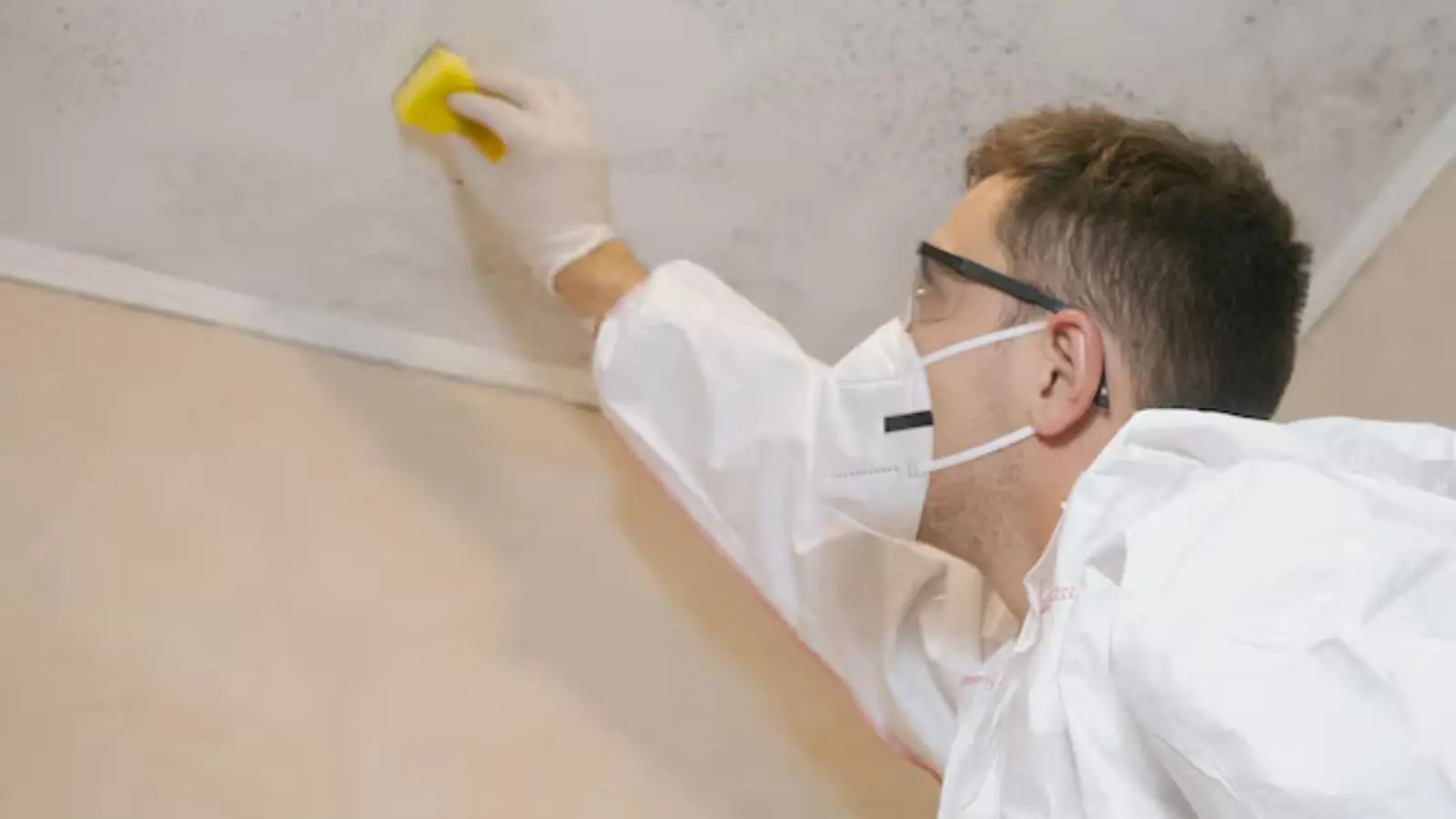
Start with the water, not the stain
Mold on a ceiling is a symptom. Something wet sits above or inside that drywall, and until it is found and stopped, any cleaning you do is temporary. A professional crew spends its first minutes looking up, not scrubbing.
Common sources in Arroyo Grande, CA homes include a failed bathroom supply line, a roof leak over a bedroom, a condensate line from an air handler in the attic, and a bath fan that dumps steam into the insulation. Each one leaves a different stain pattern, and each needs a different fix before the ceiling is touched.
The sequence a restoration crew follows
The exact scope depends on how far the growth runs and how wet the materials are. The order, though, rarely changes.
- 1
Find and stop the moisture
A moisture meter and a thermal imaging camera trace the wet zone through the drywall and into the attic. The leak gets repaired or isolated by a plumber or roofer first.
- 2
Isolate the work area
Plastic sheeting and tape seal the room, and a negative air machine with a HEPA filter keeps spores from drifting into hallways. Registers and returns in the room get covered.
- 3
Decide: remove or treat
Porous, soaked, or crumbling drywall and insulation are cut out and bagged. A firm, dry, lightly marked surface may be HEPA vacuumed and cleaned in place, depending on the scope.
- 4
HEPA vacuum and damp wipe
Framing and any remaining surfaces get HEPA vacuumed, then wiped with a damp cloth. Dry brushing or blowing air across the surface is avoided because it sends spores airborne.
- 5
Dry the structure
Air movers and an LGR dehumidifier bring the cavity back to normal moisture readings, which are checked and logged day by day.
- 6
Verify before closing up
Readings are confirmed with the meter, and a visual check is made of every surface. Testing and remediation follow ANSI/IICRC S520, so ask any company whether its crews work to it.
Call the 24/7 line and describe what you see.
When a small patch is a fair homeowner job
There is a narrow case where cleaning it yourself makes sense. The patch is small, say a hand-sized area of surface marks on a painted ceiling, the drywall is firm and dry, and you have already fixed the cause. A steamy bathroom with a weak fan is the classic example.
If the spot returns within weeks, the drywall feels soft, the paint is bubbling, or the stain has a ring that grows after rain, the moisture is still there. At that point it is no longer a cleaning problem, and a meter reading beats guessing.
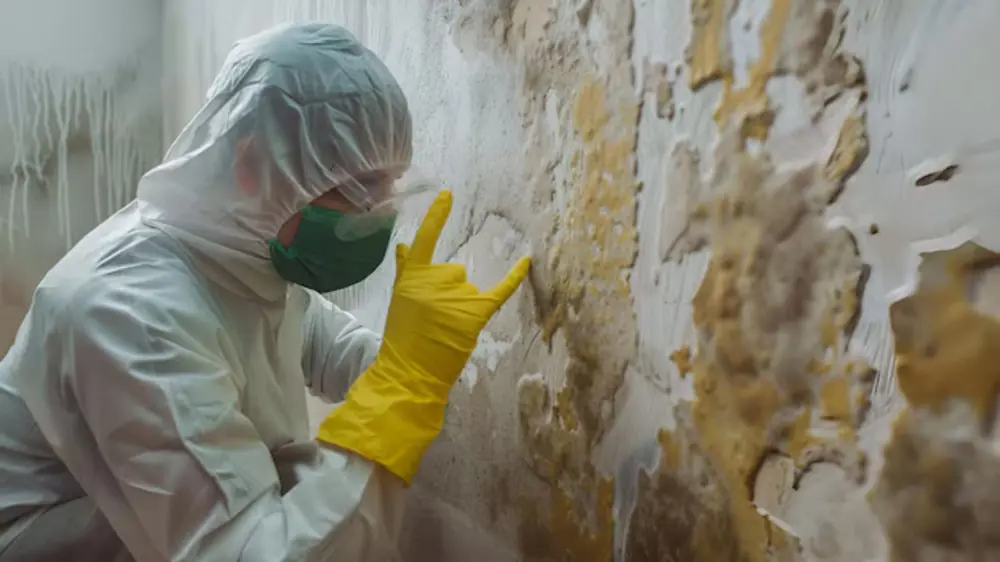
Before you touch the ceiling
Run through this checklist first. If any line fails, stop and call a professional.
- Confirm the source is fixed and the area is bone dry, ideally with a borrowed or rented moisture meter.
- Turn off the room's HVAC so spores are not pulled through the ducts.
- Wear an N95 respirator, goggles, and gloves, and keep children and pets out of the room.
- Lay plastic on the floor and tape it to the wall, then work slowly with a damp cloth, not a dry brush.
- Bag the cloths right away and take them outside.
- Skip painting over the spot until it has stayed clean and dry for a few weeks.
- Leave anything bigger than a hand, or anything on insulation or framing, to a professional.
Where cleaning ends and remediation begins
Once growth covers more than a small patch, or the drywall has been wet for days, the job becomes mold remediation. That means containment, controlled removal, and drying under a written scope, not a spray bottle. The goal is to take out what mold is feeding on and remove growth, because dead mold still sits in the material.
After the mold work comes the rebuild. New drywall, insulation, texture, and paint are covered under water damage repair, which usually starts only after the readings are dry. Crews who serve Grover Beach and Nipomo work from this same sequence, so the process does not change by town.
A note on health: this page does not diagnose anything. Mold needs moisture to grow, and questions about symptoms belong with your physician.
Arroyo Grande note: ask the city before a rebuild
Cutting out and replacing a ceiling is more than cosmetic work, and some rebuilds may need a permit. The city's Community Development Department handles building and permit questions at City Hall, 300 E Branch Street, Arroyo Grande, CA 93420.
Permit applications go through the city's Citizenserve portal. Before you hire anyone, call the department, describe the scope, and ask whether it needs a permit. Also check any contractor's license on the CSLB website, since California requires a license for work of $1,000 or more in combined labor and materials.
Source type: City of Arroyo Grande site and California Contractors State License Board
Ready to have it looked at?
Scope and price are explained before work starts, and the line is answered 24/7. Want your real number? Call (805) 291-8940.
Questions Homeowners Ask
Can I just paint over mold on a ceiling?
No. Paint hides the mark but the moisture and the growth stay underneath, and the stain tends to bleed back through. Fix the water source and have the material cleaned or removed first, then prime and paint.
Does bleach get rid of ceiling mold?
Bleach can lighten surface color, but it does not remove growth from porous drywall or paper, and it adds moisture. Most professional scopes rely on removal, HEPA vacuuming, and damp wiping instead.
How do I know if the drywall has to come out?
Soft, swollen, crumbling, or sagging drywall usually has to be cut out. Firm, dry drywall with light surface marks can sometimes be cleaned in place. A moisture meter and a thermal imaging camera settle the question better than a guess.
Does homeowners insurance cover ceiling mold?
It depends on the cause. Sudden and accidental water damage is often covered, while gradual leaks and neglect often are not. Check your policy and ask your insurer before work begins.
Should I get the mold tested first?
Testing can help document what is present, but it does not replace finding the moisture. Testing and remediation follow ANSI/IICRC S520, so ask any company how it handles both.
Does Arroyo Grande require a permit to replace a water-damaged ceiling?
Some rebuilds may need one, and the answer depends on the scope. Ask the city's Community Development Department before work starts, and note that any permit-required job falls outside the usual small-job license exemption.