
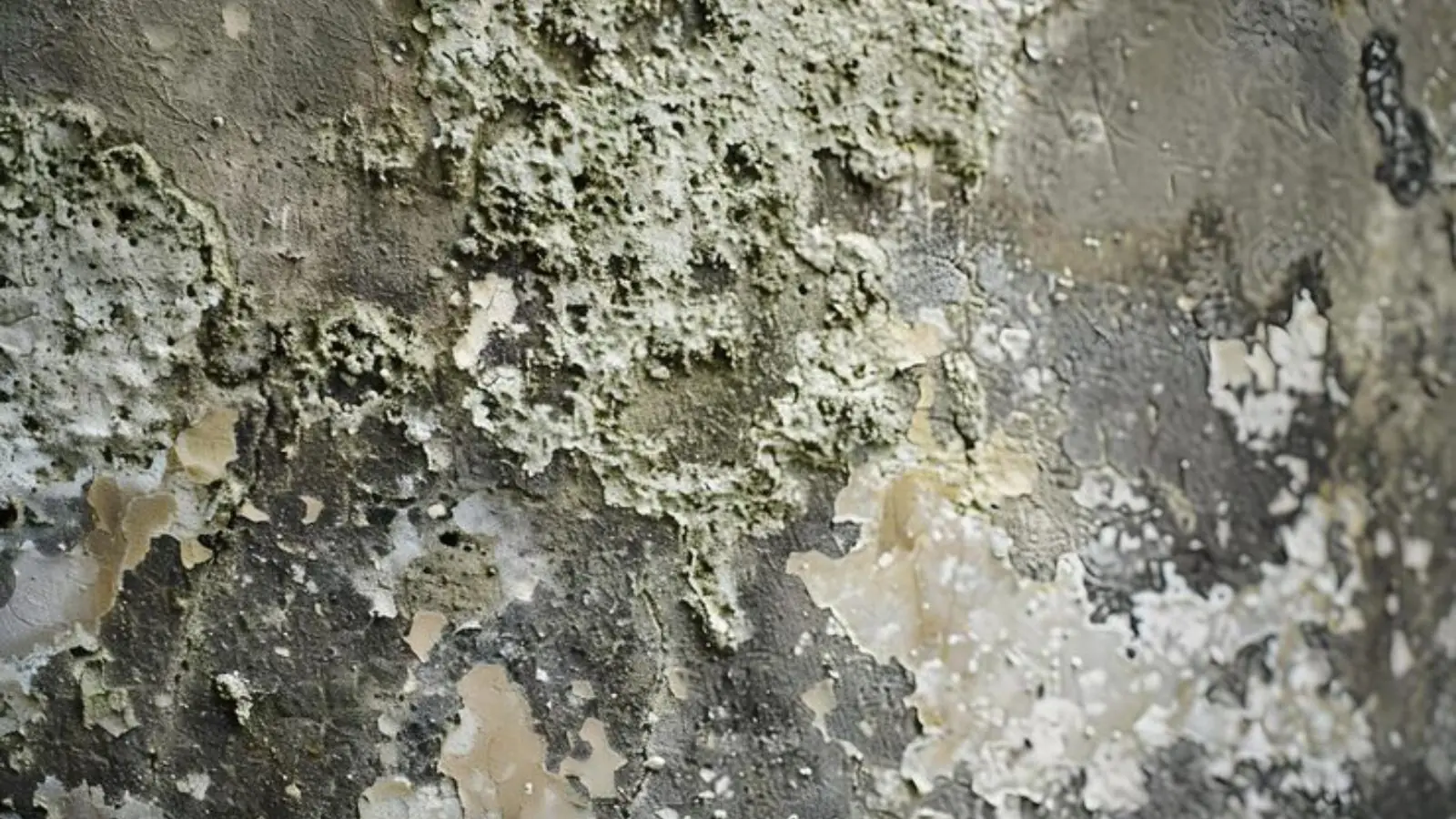
Dead mold is still mold on the wall
Search for how to kill basement mold and you get a list of liquids to spray. The trouble is the goal itself. A treated patch can stop growing and still sit on the drywall, the framing, or the stored boxes beside it.
Industry practice under ANSI/IICRC S520 is built around removal and moisture control, not around a product that kills. That one shift in thinking explains why a basement can look clean on Saturday and spotted again by the next month.
Think of it as two jobs. One is taking out what has grown, and the other is taking away the conditions that let it grow. A shop-vac without a HEPA filter, a dry scrub brush, or a box fan pointed at the wall all fail the first job, because they throw material into the air instead of capturing it.
Common approaches and what each really does
Here is a plain accounting of the usual home treatments.
| Approach | What it does | What it does not do |
|---|---|---|
| Household bleach | Lightens color on hard, nonporous surfaces | Does not reach into drywall, wood, or paper, and it adds water |
| White vinegar | Cleans light surface growth on some hard surfaces | Does not remove growth from porous material or fix the moisture |
| Fogging or foggers | Spreads a treatment through the air | Leaves growth on surfaces and does not replace removal |
| Painting with mold-resistant paint | Gives a cleaner-looking finish | Seals in whatever is underneath |
| Dehumidifier | Lowers humidity so growth slows or stops | Does not remove what has already grown |
| HEPA vacuum and damp wipe | Removes growth and debris from hard surfaces | Works only after the moisture problem is fixed |
| Cutting out wet drywall or insulation | Takes the food source out of the house | Needs containment and proper disposal |
No approach in this table is a cure on its own. Moisture control has to come first, and removal has to follow.
Call the 24/7 line and describe what you see.
Why the humidity matters more than the spray
Mold needs moisture. A basement wall that sweats in the morning, a slab that stays damp, or a clothes dryer vented into the room gives it that moisture every single day, and no spray keeps up.
A hygrometer costs little and tells you the truth. If the room sits well above the comfortable range on most days, a properly sized dehumidifier and a hard look at drainage, gutters, and grading belong at the top of the list. A restoration crew also uses moisture meters and a thermal imaging camera to find wet spots you cannot see.
Stored items matter too. Cardboard boxes, old rugs, and paper hold moisture and feed growth, so move what you keep onto shelves off the floor and away from exterior walls. Leave a few inches of space behind them so air can move, and toss anything soaked that cannot be dried within a day or two.
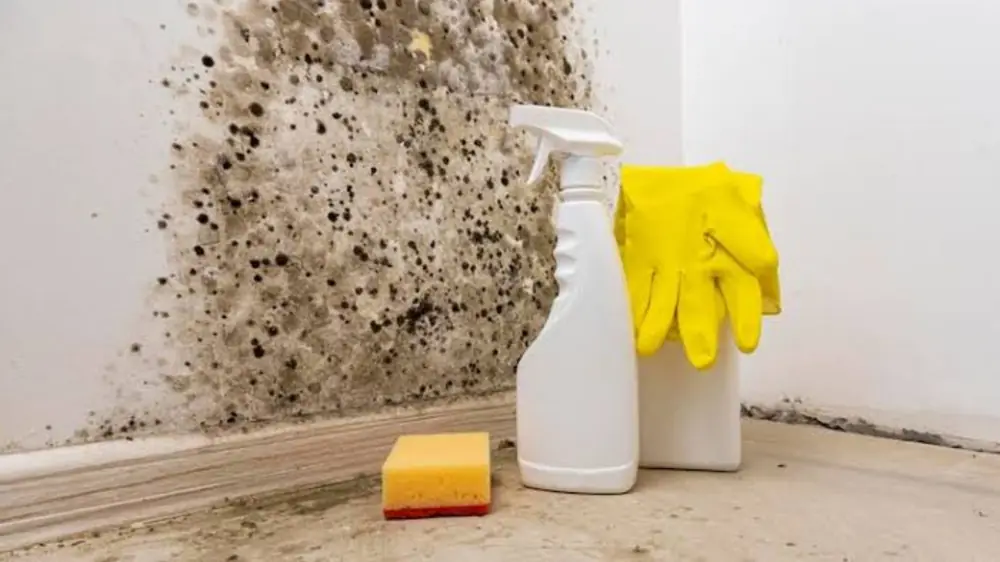
Fixing the real problem, in order
- 1
Find the water
Trace damp spots back to a plumbing leak, a grading issue, a gutter overflow, or a floor drain. Do not treat the wall until the source is addressed.
- 2
Dry the room
Air movers and LGR dehumidifiers pull moisture out of the slab, walls, and air. This is the heart of water mitigation work.
- 3
Remove, don't just treat
Soaked drywall, carpet pad, and insulation come out. Hard surfaces get HEPA vacuumed and damp wiped, with the area contained.
- 4
Verify and monitor
Moisture readings confirm the structure is dry, and a hygrometer keeps watch afterward. Nobody can promise mold will never return.
When to call instead of scrub
Call a professional when the affected area is large, the drywall is soft, there is a musty smell with no visible source, or the water came from a sewage backup or a flood. A basement that took on water is a drying job first and a mold job second, and the mold remediation scope follows the drying records.
Teams serving San Luis Obispo and Grover Beach use the same order of work. Ask any company whether its crews follow S520 for mold and S500 for the water.
Health questions belong to your physician. This page does not diagnose or advise on symptoms.
Wet basement checklist: do this first
Before any cleaning starts, work through these points.
- Stay out of any room where water touches outlets, a panel, a furnace, or a water heater.
- If you smell gas or see sparking, leave and call 911 before anything else.
- Shut off the main water valve if a pipe is the source.
- Photograph the walls, floor, and stored items before moving anything.
- Move boxes and valuables up and out, and discard soaked cardboard.
- Run a dehumidifier only where the electrical setup is dry and safe.
Arroyo Grande note: electrical and gas risk first
Under the county's levee failure plan, Five Cities Fire Dispatch is on the notification list. That is a useful reminder of who handles emergencies here. If water reaches electrical equipment or you suspect a gas leak in a below-grade room, call 911 first, then call the restoration line.
Do not wade into a flooded room to reach a panel. Wait for the all-clear before you run any equipment, and keep a dated photo record of the damage for your insurer.
Source type: San Luis Obispo County Public Works page
Next step
Scope and price are explained before work starts, and the line is answered 24/7. Want your real number? Call (805) 291-8940.
Questions Homeowners Ask
Does bleach kill mold in a basement?
Bleach can change the color of growth on hard, sealed surfaces, but it does not penetrate porous material like drywall or wood. It also adds moisture, which works against you.
Is vinegar a safe way to deal with basement mold?
White vinegar can clean light surface growth on some hard surfaces. It does not fix the moisture, and it does not remove growth from porous materials.
Will a dehumidifier get rid of mold?
No. A dehumidifier lowers humidity so new growth slows or stops, but existing growth stays until it is removed. It is a control tool, not a removal tool.
Do mold foggers work?
Fogging puts a treatment into the air, but growth sitting on drywall, wood, and stored items stays put. Professionals rely on containment, removal, HEPA vacuuming, and drying instead.
Why does basement mold keep coming back?
Usually the moisture was never fixed, or porous material was treated and left in place. Moisture control and removal address both problems, though no one can promise mold will not return.
Who do I call first if my below-grade room floods near electrical equipment in Arroyo Grande?
Call 911 for any electrical or gas risk before you call the restoration line. Five Cities Fire Dispatch appears on the county's notification list for levee emergencies, which tells you it is a dispatch you can expect to reach in a real emergency.