
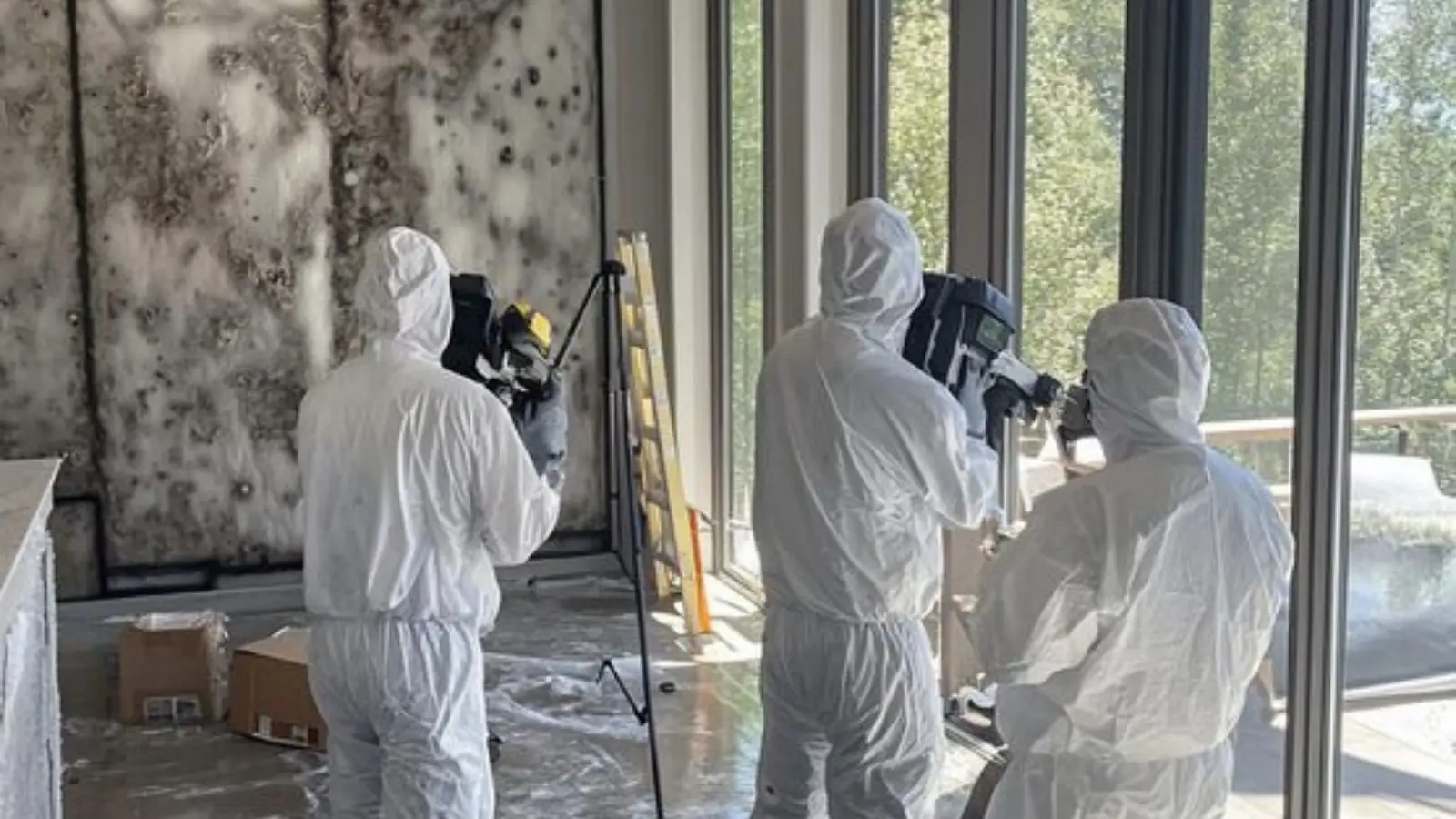
Mold needs water, so the job starts with water
Mold clean up in Arroyo Grande, CA is only as good as the moisture work behind it. Mold grows where materials stay damp, so if the leak, condensation or seepage is still active, scrubbing the surface just resets the clock.
That is why a scope begins with finding the moisture source and ending it. A plumber fixes the pipe, a roofer fixes the flashing, and a restoration crew dries what the water touched. Cleanup comes after those, not before.
The published standard here is ANSI/IICRC S520, which covers mold remediation. Ask any company whether its crews work to it, and ask to see the written plan before anything is torn out.
The steps, in order
- 1
Assess and map
A technician uses a moisture meter and thermal imaging camera to find wet materials and the boundary of the affected area.
- 2
Set containment
Plastic sheeting and zip doors seal the work zone. Air scrubbers with HEPA filtration run so negative pressure keeps dust inside.
- 3
Protect the rest of the house
Floors are covered, supply registers are sealed and the HVAC is shut off in the work area.
- 4
Remove what cannot be cleaned
Porous materials with growth, such as drywall, insulation and carpet pad, are cut out, bagged and carried out sealed.
- 5
Clean what stays
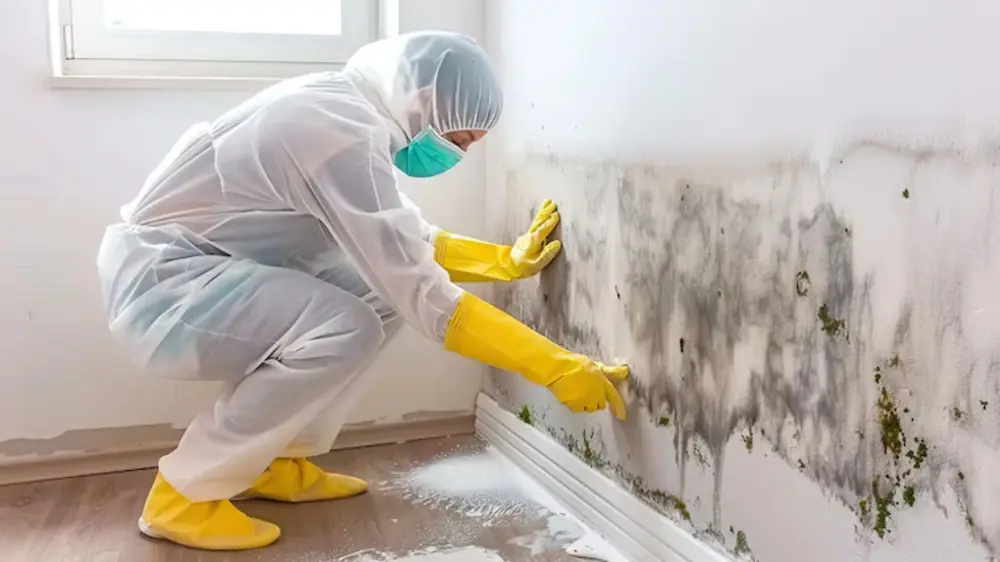
Framing and other solid surfaces are HEPA-vacuumed, wire-brushed or sanded, then wiped down.
- 6
Dry the structure
Air movers and LGR dehumidifiers bring materials back to their dry reference readings.
- 7
Verify
The crew checks moisture readings and visual cleanliness, and a separate tester may sample air or surfaces for clearance.
Call the 24/7 line and describe what you see.
What containment actually does
Containment exists because disturbing mold releases spores and dust. Sheeting walls off the work zone, a negative air machine pulls air through a HEPA filter and out of the house, and a decontamination chamber at the door keeps crews from tracking material into clean rooms.
Small, dry, surface-only jobs may need less than a full chamber, and a good scope says so in writing. Larger jobs, anything in an attic or crawl space tied to the living area, or growth inside wall cavities usually call for the full setup. Ask the crew to show you where the plastic goes before the first cut is made.
Containment also protects you from a different problem, which is cross-contamination. Without it, the dust from cutting out one wet wall ends up on the sofa two rooms away and becomes a second cleanup.
Who does what
| Role | Task | Why it is separate |
|---|---|---|
| Plumber or roofer | Fixes the source of the water | Without this, mold returns to a wet material |
| Restoration crew | Dries, contains, removes and cleans | Holds the work to a written scope |
| Independent tester | Samples before and after if you want testing | Does not profit from the removal work |
| Rebuild contractor | Replaces drywall, trim, paint, flooring | Starts only after readings are dry |
| Homeowner | Photographs, moves valuables, reads the scope | Owns the decision and the policy conversation |
Thrown away versus cleaned
The rule of thumb: porous goes, solid stays. Mold roots into materials that hold water, so surface wiping rarely solves them.
Usually removed
Drywall, insulation, ceiling tile, carpet and pad, particleboard cabinet bases, and cardboard storage.
Usually cleaned
Wood framing, concrete, metal, tile, glass and sealed hard plastic.
Case by case
Solid wood furniture, books, clothing and electronics depend on how wet they got and how valuable they are.
Containers you will see
Heavy poly bags and sealed buckets are used so spores do not drift down the hall on the way out.
Arroyo Grande note: clean water has a clock too
Arroyo Grande, Grover Beach, Pismo Beach and Oceano receive treated water from Lopez Lake through the county Lopez Water Project. A supply line that leaks in one of those towns starts out as clean Category 1 water.
Clean water does not stay clean. Left on wet drywall and carpet, it picks up organic material and degrades within a day or two, which is why you want fans and dehumidifiers running early. A burst line you dried quickly rarely leads to a mold job. One you left until Monday often does.
Source type: San Luis Obispo County Public Works, Lopez Water Project
A clean up checklist to hold the crew to
Before work begins, you should be able to tick off each item on the written scope.
- The moisture source is named and stopped, with who fixes it.
- Square footage and rooms in the work zone are stated.
- Containment and air filtration are described, not implied.
- A list says which materials are removed and which are cleaned.
- Drying equipment and the target readings are listed.
- Verification steps are named, and who performs testing is clear.
- Rebuild work is either included or clearly excluded.
- Scope and price are explained before work starts.
Drying and the final check
After removal comes drying, and this is where a cheap job quietly fails. Wall cavities need airflow, and subfloors need time. The crew should log moisture readings each visit, so the end point is a number, not a feeling.
Verification happens in two parts. First, a visual check for any remaining growth and dust. Second, moisture readings in the materials that stayed. Some owners add post-remediation testing by a separate company, which is a reasonable call when a lender, tenant or buyer is involved.
If the mold followed a recent leak, a water mitigation visit is often the first stop, and mold remediation follows if growth appeared. The same sequence applies for a crawl space near San Luis Obispo or an attic in Pismo Beach.
Getting the job scoped
A good scope reads like a recipe you could hand to a second company. If you have wet materials or visible growth, call (805) 291-8940 and the line is answered 24/7.
Questions Homeowners Ask
Can I clean mold myself?
A small spot on a hard surface, from a known cause that is already fixed, is something many people handle. Larger areas, anything inside walls or HVAC, or growth after a sewage or flood event is a job for trained crews. Health questions belong to a physician.
Does bleach solve mold?
Bleach can lighten a stain on a hard surface but does not reach roots in porous materials. Removal and cleaning with HEPA vacuums is the usual approach under ANSI/IICRC S520.
Do I need testing before the cleanup?
Not always. Visible growth with a known water source often moves straight to a scope. Testing is useful when you suspect hidden growth or want a before-and-after record.
Will mold come back after the cleanup?
No company can promise that. Mold needs moisture, so the safest path is to fix the source, dry fully and watch humidity.
How soon should I start drying after a supply line leak in Arroyo Grande?
As early as you can. Water from the Lopez Water Project starts as clean Category 1 water but degrades if it sits on porous materials for a day or two. Fast extraction and drying keep the job simple.
Is the cleanup covered by insurance?
It depends on the cause. Sudden and accidental water events are often covered, gradual leaks and neglect often are not. Check your policy and ask your insurer.