
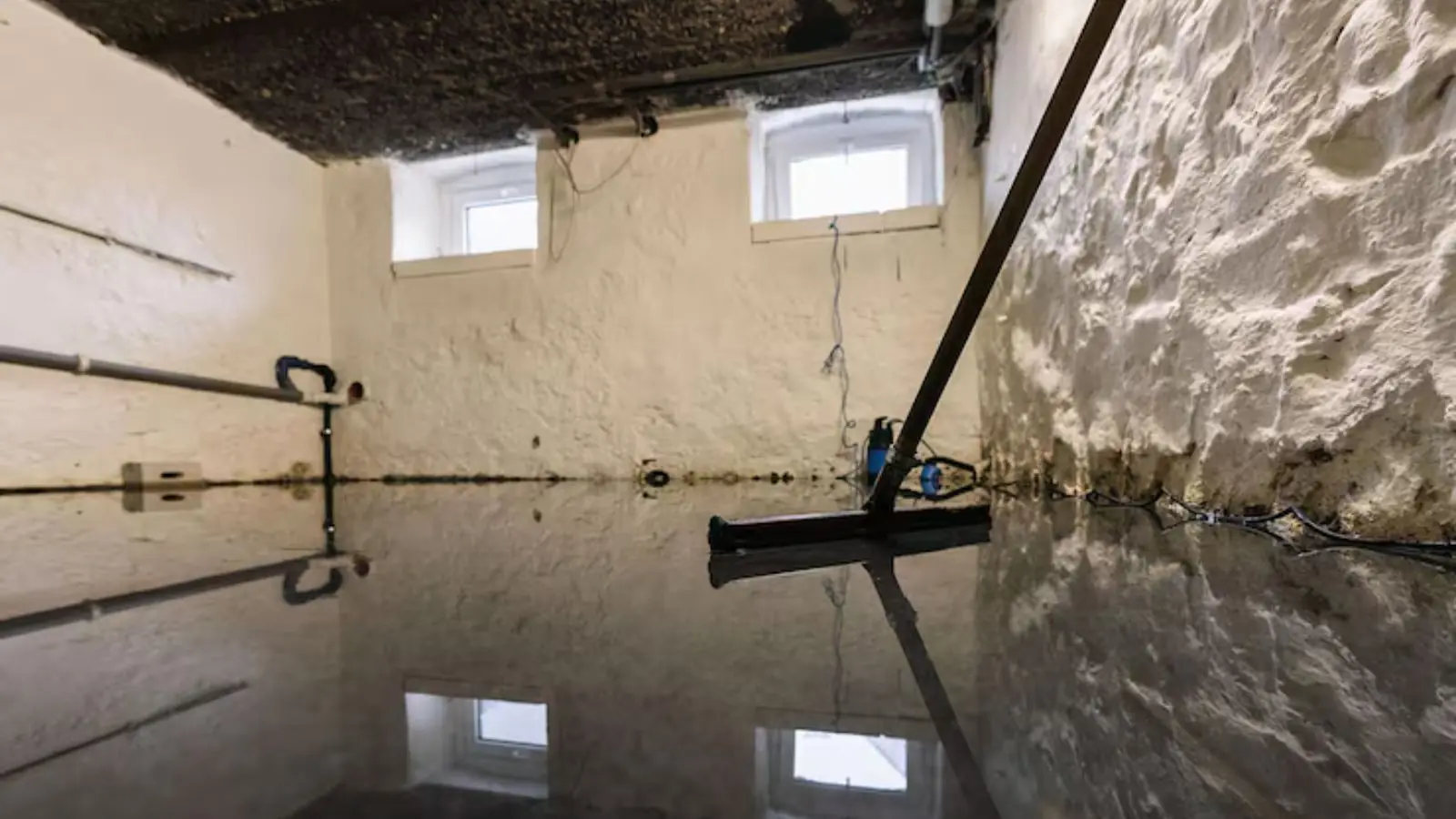
Below grade is a position, not a basement
Water damage in a basement is really a problem of elevation. Anything lower than the ground outside collects water and releases it slowly. Plenty of homes around Arroyo Grande, CA have no true basement, but they still have a sunken garage, a crawl space, a half-level family room or a laundry nook cut into a slope.
Those spaces behave the same way. Water enters from the sides or from the floor, finds the lowest corner and soaks into whatever touches the ground. Drywall wicks it upward. Carpet pad holds it like a sponge. Stored boxes on the floor absorb it from below.
That is why the first two days matter so much. Below-grade rooms have little airflow and cool surfaces, so they dry slowly and stay damp long after the visible puddle is gone.
Hour by hour: what the first 48 hours should look like
Use this order if water is already in the room. Skip a step only if it does not apply to your space.
- 1
Hour 0: protect yourself
Stay out of the room if water is near outlets, a panel or a sump pump cord. Standing water and live current are a bad mix, so cut power only from a dry spot.
- 2
Hour 0 to 1: find the source
Shut off the main water valve if a pipe, water heater or washing machine hose is the cause. If it is groundwater or storm runoff seeping in, you cannot shut anything off, so move to the next step.
- 3
Hour 1 to 3: call the line
Describe what you see: how deep the water is, what the floor is made of and whether the water looks clear, gray or dark. That tells the crew which pumps and extraction units to bring.
- 4
Hour 3 to 12: pull water out
Pumps and truck-mounted or portable extraction units remove the bulk of it. Wet carpet pad usually comes out now, because it never dries well in place.
- 5
Hour 12 to 24: open and map
Technicians cut small flood cuts in wet drywall, pull baseboards and use moisture meters and a thermal imaging camera to find water behind surfaces you cannot see.
- 6
Hour 24 to 48: set the drying
Air movers and LGR dehumidifiers go in and run around the clock. A closed, steady room dries faster than one with the door open to damp air.
Call the 24/7 line and describe what you see.
Four kinds of low room, four different problems
Finished basement
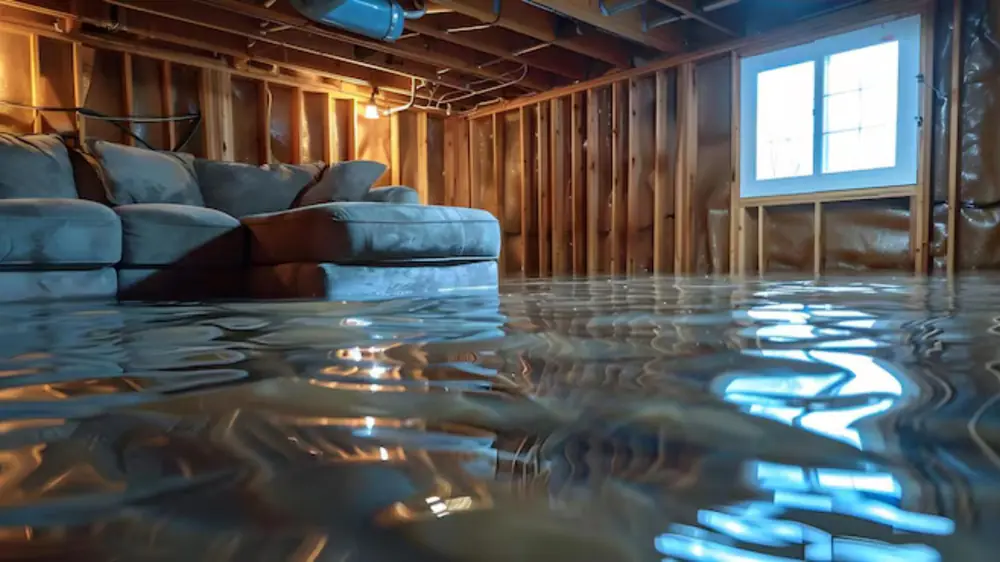
Carpet, pad, drywall and framing all hold water. Expect to remove the bottom foot or two of wall board if the water sat.
Garage below street level
Concrete does not absorb much, but stored cardboard, tools and the bottom plate of walls do. Lift everything off the slab first.
Crawl space
You cannot see most of it from above. Look at insulation sagging between joists and a musty smell in the floors overhead.
Sunken or ground-level room
Water here often arrives through the slab edge or a door threshold. Check for baseboards pulling away from the wall.
Arroyo Grande note: the creek channel and your flood map
Arroyo Grande Creek runs through the city inside a county-maintained channel called Flood Control Zone 1/1A. It was built in 1961 and originally designed for 50-year flood protection. Development since then has reduced that margin, and the county estimates a flood that was a 50-year event in 1955 now comes every 15 to 20 years.
The severe 2023 winter storms deposited sediment in the channel, and the flood control district removed about 11,500 cubic yards of it. The 3.5-mile levee system exists to keep the creek confined from Los Berros Creek to the Pacific. If your low room is anywhere near the creek, look up your own address on the FEMA Flood Map Service Center before you decide what to repair, since that map decides what kind of flood coverage you may need.
Source type: San Luis Obispo County Public Works, Arroyo Grande Creek Channel page
Why clear water becomes a bigger job by day two
Water is sorted by what it carried in. Clean supply-line water is the easiest case. Groundwater and storm runoff carry soil and bacteria, and sewage backing up through a floor drain is the worst. Water that starts clear can be reclassified as it soaks into dirty materials and sits.
This is the reason professional crews treat a flooded basement as a flood damage restoration job instead of a simple mop-up. Porous materials that touched dark or contaminated water are usually removed, not dried. Crews working to ANSI/IICRC S500 follow written rules on that, so ask any company whether its technicians do.
Time also changes what can be saved. Wet drywall and insulation can start to grow mold on a timeline measured in days. Fast removal is cheaper than a second project later, and it keeps a wet room from turning into a mold question.
What you can do while you wait
These are safe for most homeowners. Stop any item that puts you near live electricity or deep water.
- Shut off the main water valve if a supply line or appliance is leaking.
- Turn off power to the wet area only from a dry spot. If you cannot reach the panel dry, call the utility or 911 first.
- Carry valuables, paper files and electronics to a dry floor above the waterline.
- Pull up loose rugs and lift furniture legs onto foil or plastic blocks.
- Keep children and pets out of the water, especially if it looks gray, brown or smells like sewage.
- Take dated photos and video of the water level and damaged items before anything is moved.
- Do not use a household vacuum on standing water, and do not run a box fan through wet cord connections.
If you are in Grover Beach or Oceano
Whether the house sits in Grover Beach or Oceano, the first sign of trouble in a low room is rarely a puddle. It is a swollen baseboard, a soft spot in vinyl flooring or a smell that comes and goes.
Do not wait for visible water before you call. If the room smells damp or the floor feels cool and spongy, a moisture meter reading answers the question in minutes.
If your space is already wet, emergency water removal is the first service most people need, because drying cannot start until the standing water is gone.
Ready for a crew to take over?
A below-grade space gives you a short window. The right sequence is stop the source, get the water out, open the walls that hold moisture and dry with equipment sized to the room. Scope and price are explained before work starts, and same-day response is available when crews can reach you.
Call (805) 291-8940 now and the line will be answered 24/7.
Questions Homeowners Ask
Can I just use a wet vac on a flooded basement?
A wet vac can help with a thin film of clean water, but it will not clear a few inches of standing water and it does nothing for water inside walls or under flooring. For anything deeper, extraction units and pumps are the right tools. Always keep the vac plugged into a dry outlet.
How long does it take to dry a wet basement?
Most structural drying takes several days, and the number depends on how much material got wet and how humid the space is. Crews check moisture readings daily and stop only when the materials reach their dry goal. Ask the company how it will document that.
My home has no basement. Can I still have this kind of damage?
Yes. A crawl space, sunken garage or ground-level room can take on water from groundwater, a failed sump or a supply line break. The first 48 hours matter just as much in those spaces.
Should I throw away everything that got wet?
Not always. Hard items like metal and glass can often be cleaned, while carpet pad, particleboard and cardboard usually cannot. Photograph items before you discard them, because your insurer may ask about them. Check your policy.
Does creek proximity mean my basement is in a flood zone?
Not by itself. Your zone depends on your specific address, so look it up on the FEMA Flood Map Service Center and ask the city if the map is unclear. Flood damage is usually excluded from standard homeowners policies, so confirm what you carry.
Did the 2023 storms change anything about the Arroyo Grande Creek channel?
The county reports that the severe 2023 winter storms deposited sediment in the channel, and the flood control district removed about 11,500 cubic yards. If you live near the creek, that is a reminder to review your coverage and keep valuables off low floors during wet months.