
First, decide what can wait
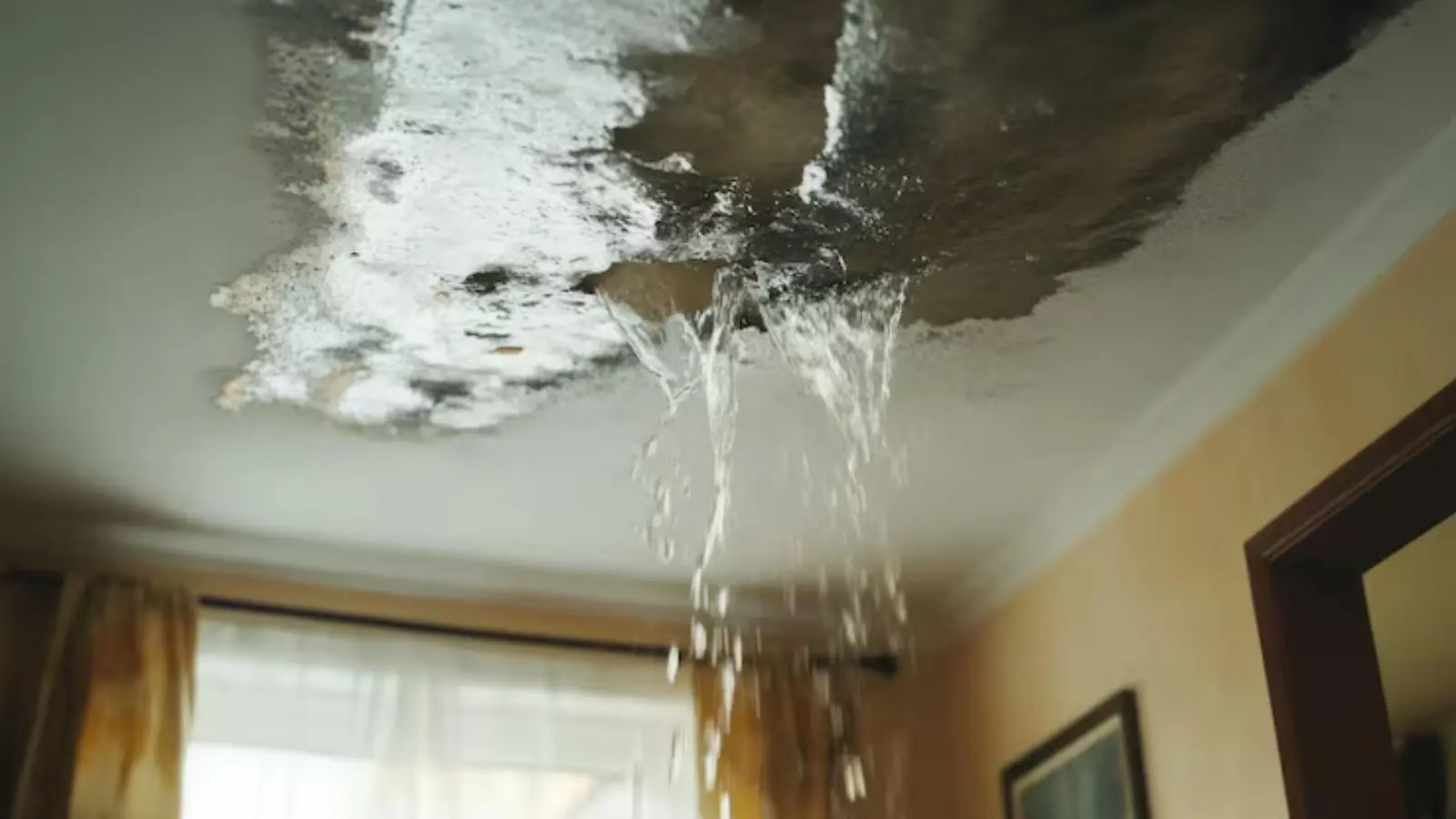
Look at the ceiling from the doorway, not from underneath it. A faint brown stain that is not growing can wait until daylight. A bulge, a sag, a steady drip, or water running down a wall cannot.
Ask yourself three questions: is water still coming in, is the ceiling holding weight, and does the wet area include a light fixture, fan, or outlet? Your answers decide what comes next, and the third one is about safety, not property.
Triage by what you see
Bulging or bubbling
Water is pooled behind the paint or drywall. It may be relieved safely, as described below, but only from a safe position.
Sagging
The board has absorbed enough water to lose strength. Keep everyone out of the room and call for help.
Steady drip
Put a bucket under it, lay a towel in the bucket to cut splash, and find where the water enters upstairs or in the attic.
Light or fan is wet
Leave the switch alone and shut off the breaker only if you can reach the panel dry. If the panel is wet, call 911 or the utility first.
Stain only, no movement
Mark the edge with a pencil and the time. If it grows overnight, the leak is active.
Call the 24/7 line and describe what you see.
How to relieve a bulge safely
Do this only if the ceiling is bulging, no electrical is involved, and you can stand to the side.
- 1
Clear the floor
Move furniture out and put a large bucket or a plastic bin directly under the lowest point of the bulge, with a tarp beneath it.
- 2
Protect yourself
Wear eye protection and keep your face out of the line of fall. Hold a long screwdriver or similar tool at arm's length.
- 3
Poke a small hole
Pierce the lowest point of the bulge and let the water drain into the bucket. Keep the hole small, near the center of the bulge, and away from fixtures.
- 4
Keep draining
Empty the bucket as it fills. If the flow does not slow, the source is still active and needs to be found upstairs.

Lights, fans and anything electrical
Water and wiring travel together inside a ceiling. A recessed light or fan can hold water in its housing, and a wall switch can feed it power even when the ceiling looks only damp. Treat any wet fixture as live until it has been proven otherwise.
Do not touch a dripping fixture, and do not use a ladder under a wet one. Switch the breaker off from a dry stance, then leave the fixture alone until an electrician has looked. For any electrical or gas risk, call 911 or the utility first, and call the restoration line afterward.
Tracing the source above
If water drips only in rain, suspect the roof, flashing, or a vent. If it appears after someone uses a bath or shower upstairs, suspect a supply line, drain, or tub. If it comes with summer heat and an air handler overhead, check the condensate pan and drain line.
The attic often tells the story: wet insulation, stained rafters, or a damp duct. If you cannot see it, a moisture meter and a thermal imaging camera can trace the path. Emergency water removal is the right call when standing water is on floors, and the line is open around the clock.
Photograph before you clean
Take these shots before moving or throwing anything away.
- The whole ceiling from the doorway, then close-ups of the stain and any sag.
- The floor and furniture below, including any water on carpet or hardwood.
- The source, if you can see it, such as a dripping pipe or a stained attic rafter.
- A pencil mark on the stain edge, dated, so growth can be shown.
- Serial plates on any appliance involved, such as a water heater or air handler.
- Receipts for buckets, tarps, and any emergency repair.
What happens next
Once the water is stopped and the area is safe, the ceiling is dried and then rebuilt. A crew extracts standing water, pulls wet insulation, and sets air movers and dehumidifiers. After the readings are normal, the drywall, texture, and paint are handled as water damage repair.
Homes in Oceano and San Luis Obispo follow the same order. Insurance generally treats sudden and accidental water damage differently from slow leaks, so check your policy and ask your insurer before repairs.
Arroyo Grande note: an older town means older attics
Arroyo Grande grew from an agricultural center in the 1800s, with rail service arriving in 1883 and the city incorporated in 1911. Homes near The Village may have older roofs, attics, and plumbing.
So when a ceiling leaks, ask whoever inspects it to look at the attic and the roof, not just the stained board. Ask about flashing, old supply lines, and the duct runs overhead. An older house is not a problem by itself, but it is a reason to look up.
Source type: Wikipedia
Make the call
Scope and price are explained before work starts, and the line is answered 24/7. Want your real number? Call (805) 291-8940.
Questions Homeowners Ask
Should I poke a hole in a bulging ceiling?
Only if it is safe, meaning no electrical in the wet area and you can stand clear. A small hole at the lowest point lets water drain in a controlled way instead of letting the whole section collapse.
Is a ceiling stain an emergency?
A stain that is not changing can usually wait until morning. A growing stain, a sag, or active dripping should be treated as urgent.
Can I turn the lights back on after a ceiling leak?
Not until an electrician or the utility confirms the circuit is safe. Water in a fixture housing can create a shock risk.
Who do I call for a leaking roof versus a leaking pipe?
A roofer handles the roof and a plumber handles the pipe. A restoration crew dries and rebuilds the damaged materials after the source is stopped.
Will insurance cover a ceiling leak?
Sudden and accidental damage is often covered, while gradual leaks and neglect often are not. Check your policy and ask your insurer, and keep your photos.
Why should homes near The Village get an attic and roof check after a leak?
Arroyo Grande grew from an agricultural center in the 1800s, with rail service from 1883, so homes near The Village may have older roofs, attics, and plumbing. Ask for an attic and roof check along with the ceiling repair.