
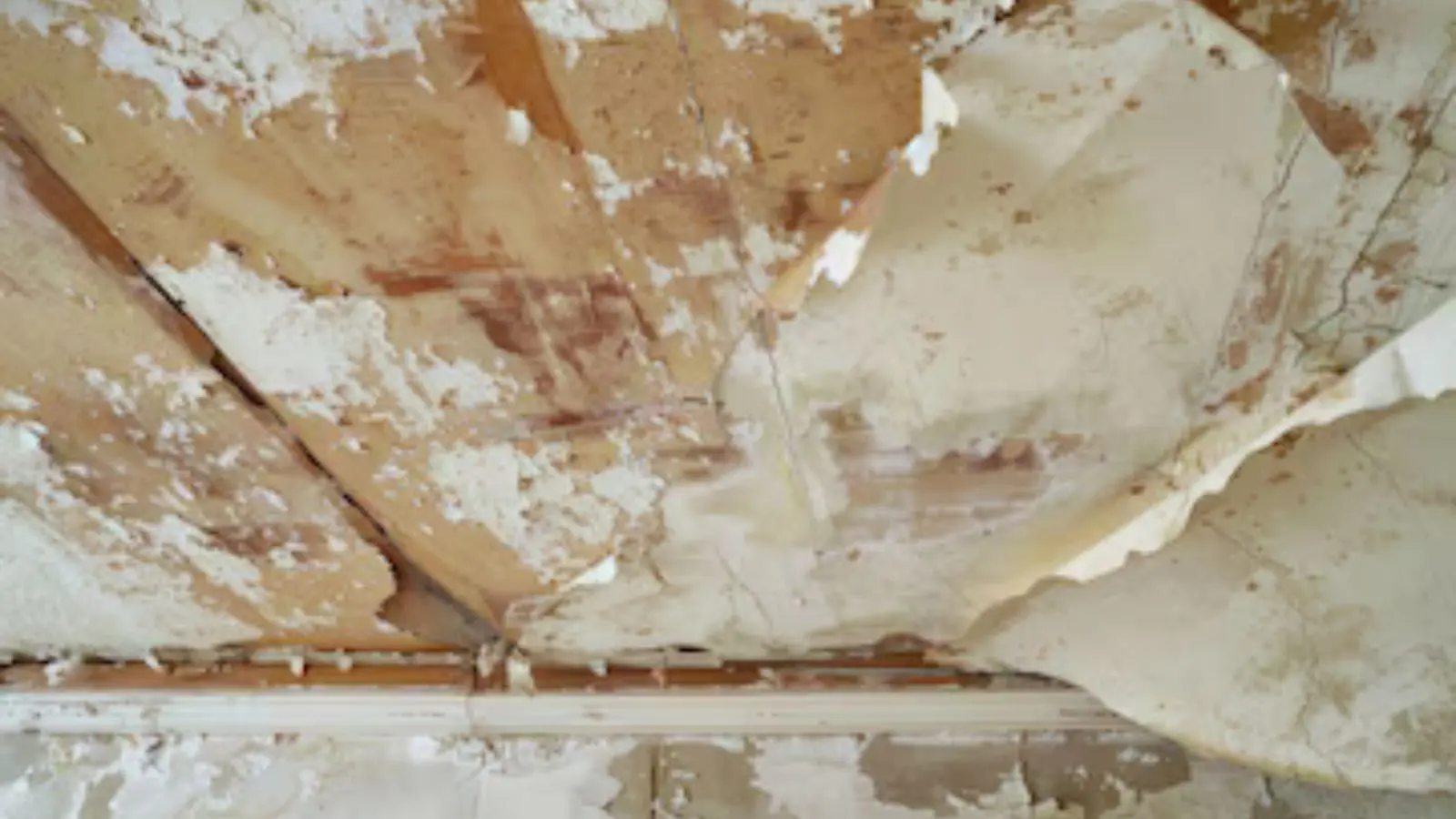
Dry first, repair second
A ceiling that looks dry is not the same as a ceiling that is dry. Paint over drywall that still holds moisture and the stain returns, the tape lifts, and the texture peels within a season. Every repair below assumes the leak is fixed and the readings are back to normal.
If the water only just happened, the first job is water mitigation: stopping the source, pulling out wet material, and running air movers and dehumidifiers. The rebuild comes after that, and a skipped drying phase is the most common reason a patched ceiling fails.
Is the ceiling safe to stand under?
A sagging, bulging, or dripping ceiling can drop without warning, and wet drywall is heavy. Water pooled in a bulge can weigh far more than people expect, and insulation above it soaks up even more.
Keep people out of the room until the weight is relieved. If a light fixture or fan is in the wet area, leave it off and shut off the breaker for that circuit only if you can reach the panel while standing on dry floor. For anything involving a wet panel or outlets, call the utility or 911 before you call anyone else.
Call the 24/7 line and describe what you see.
The repair sequence at a glance
Here is the order a crew follows once the cause is fixed. Skipping a row is where repairs go wrong.
| Step | What happens | Why it matters |
|---|---|---|
| 1. Confirm dry | A moisture meter is run across the ceiling and the framing above it | Trapped moisture ruins new drywall |
| 2. Cut out | Stained, soft, or sagging drywall is cut back to the center of the nearest joists | Screws need solid framing to bite into |
| 3. Replace insulation | Wet insulation is bagged and replaced with dry material | Wet insulation holds water against the new board |
| 4. Hang drywall | A patch or full sheet is screwed in, then taped and mudded in thin coats | Thin coats sand cleaner and crack less |
| 5. Texture | The surface is matched to the existing ceiling pattern | Mismatched texture shows even under new paint |
| 6. Prime | A stain-blocking primer seals the patch and any old water rings | Ordinary paint lets brown stains bleed through |
| 7. Paint | Two coats, usually from corner to corner of the room | Spot painting leaves visible patches |
Scope varies with how much of the ceiling was affected. Larger areas are often easier to replace as a full sheet than to patch.
Where each step can quietly go wrong
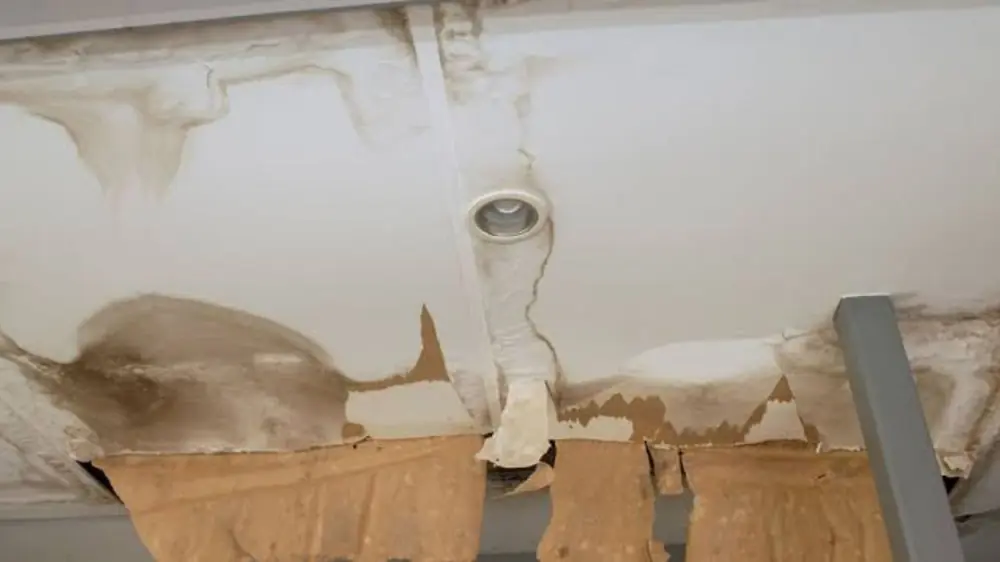
Cutting out too little is the classic mistake. Water travels along the top of the drywall, so a stain the size of a dinner plate can hide a wet zone three times wider. Cut until the board is firm and the meter reads normal on every side.
Texture is the second trap. Knockdown, orange peel, and popcorn all need a different technique, and popcorn ceilings from older homes deserve a quick question about what is in them before anyone sands. When in doubt, ask a professional how the sanding dust will be contained.
Primer is the third. Use a stain-blocking primer on every patch and any visible water ring, then let it dry fully before the finish coats.
Before you buy materials
A short checklist keeps a weekend job from turning into a month-long one.
- Confirm the roof, pipe, or drain that caused the leak has been repaired by a roofer or plumber.
- Run a moisture meter over the ceiling and the framing, and write down the readings.
- Photograph the stain and the cut-out edges before and after for your records.
- Check whether the stain or the insulation shows mold, and call a pro if it does.
- Ask your insurer before tearing out materials if you plan to file a claim.
- Measure twice and buy one extra sheet of drywall plus a bucket of premixed compound.
When the job is bigger than a patch
If the ceiling needs more than a couple of square feet replaced, or the water traveled into walls and flooring, a pro crew will save you time. The rebuild side of the work is water damage repair, and it follows the mitigation drying records so the new materials go over dry framing.
Ask each bidder what the scope covers: how far the drywall will be cut back, whether insulation is replaced, how many coats of primer and paint go on, and whether the whole ceiling is repainted. A clear written scope makes quotes easy to compare, and it keeps surprises off the final bill.
Homeowners in Oceano and Pismo Beach face the same sequence, with the same need to document the readings before closing up.
Arroyo Grande note: check the roof before the ceiling
The county reports that the 2022-2023 winter storms damaged the Arroyo Grande Creek levees in Oceano through overtopping and seepage, and a repair project mobilized in September 2023. The same kind of storm season sends rain at every roof in the county.
So before you price a ceiling, get the roof above it checked: flashing, valleys, vents, and any skylight. A new ceiling under a leaking roof gets wet again at the next hard rain, and a dry ceiling does nothing about it.
Source type: San Luis Obispo County Public Works page
Get the right crew on the phone
Scope and price are explained before work starts, and the line is answered 24/7. Want your real number? Call (805) 291-8940.
Questions Homeowners Ask
How long should I wait before repairing a water-stained ceiling?
Wait until a moisture meter shows the drywall and framing at normal readings, not until the stain looks dry. Depending on materials and conditions, that can take days, and drying equipment shortens it.
Can I fix a sagging ceiling without replacing the drywall?
Rarely. Drywall that has sagged from water has usually lost its strength, and re-screwing it hides the problem. It is normally cut out and replaced.
Do I have to replace insulation above a wet ceiling?
Wet insulation is usually removed and replaced because it holds water against the new drywall. Dry sections may be kept, and a moisture reading tells you which is which.
What primer should I use over a water stain?
Use a stain-blocking primer made for water stains, applied before the finish paint. Standard wall paint alone tends to let the brown ring show through.
Does insurance pay to fix a ceiling after a leak?
Sudden and accidental water damage is often covered, while gradual leaks and neglect often are not. Check your policy, photograph everything, and ask your insurer before repairs begin.
Should I worry about storm-season roof leaks in Arroyo Grande?
Yes, treat any ceiling stain after heavy rain as a roof clue until proven otherwise. Ask a roofer to check flashing and vents, and keep the dated photos for your records.